
There are only two points of contact between the archer and the bow – your grip and your hook. If your shots are slipping, it might be time to get a better grip on the situation.
Whether you are looking to improve consistency, reduce torque, or manage wrist discomfort, this article will help you choose the right bow grip for your shooting style and hand anatomy.
In this blog, we review a range of RCore archery grips, from the sample pack, sent to Merlin Archery London, and explain how different grip shapes, angles and design features affect recurve and barebow shooting.
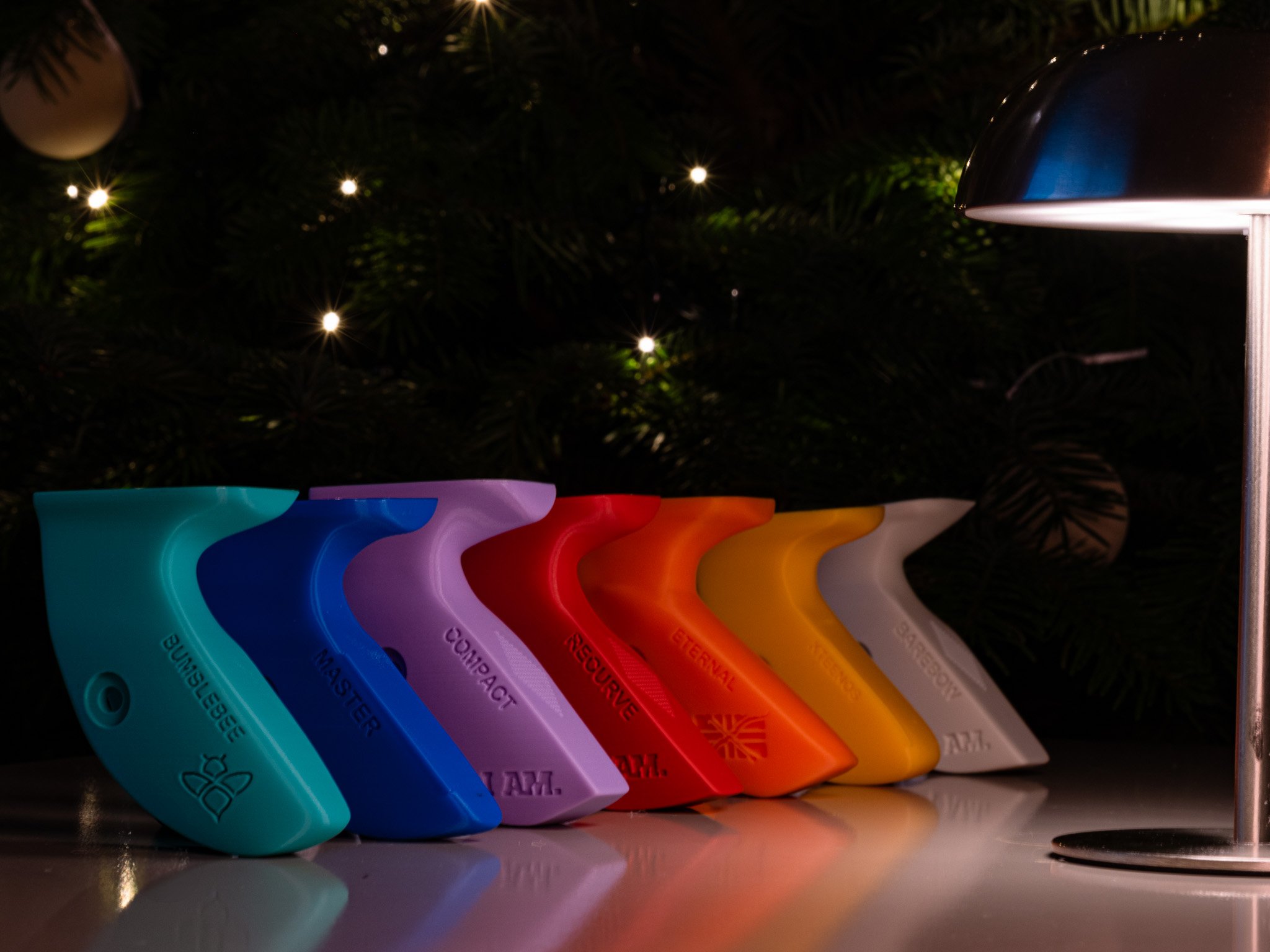
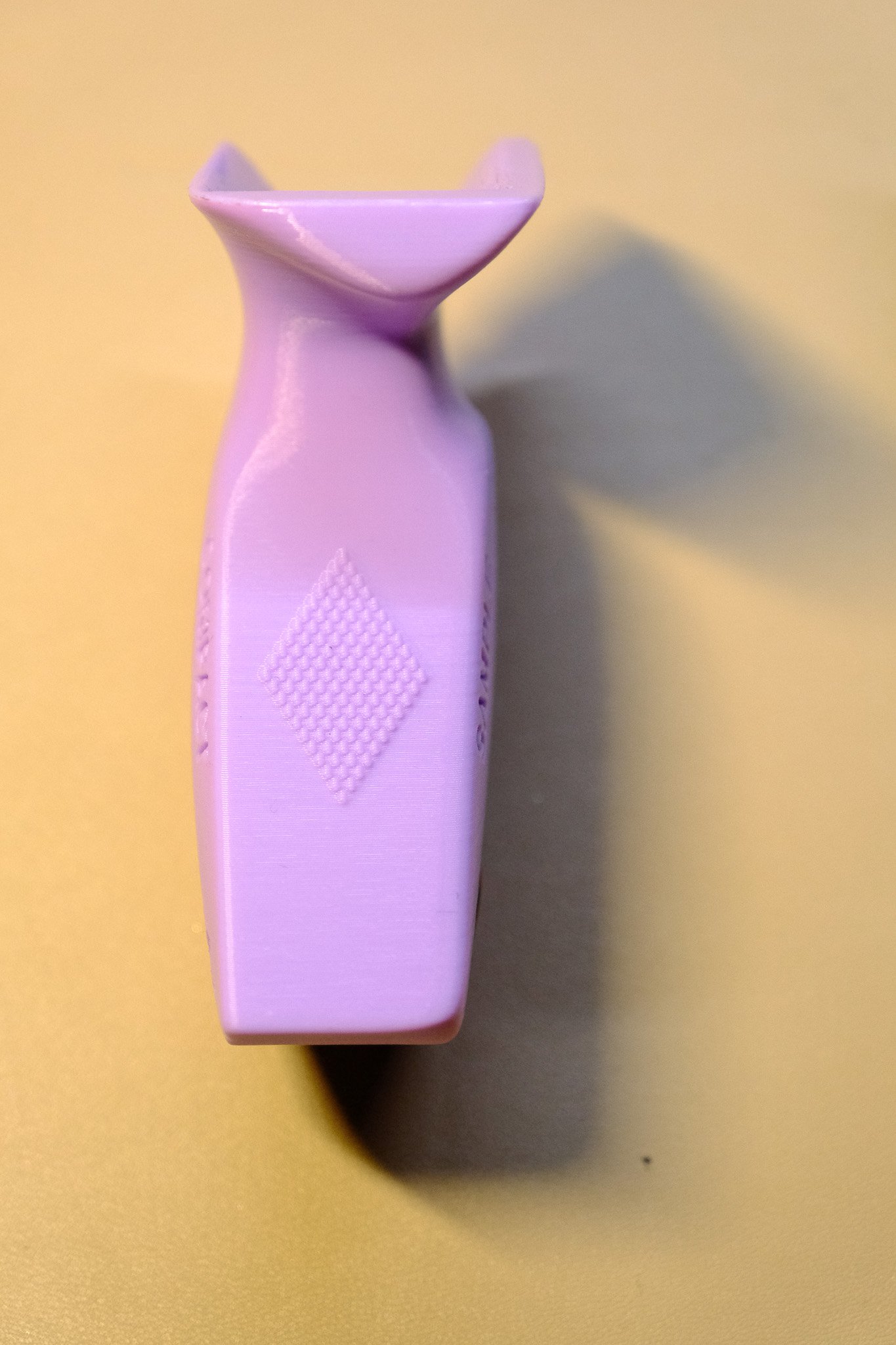
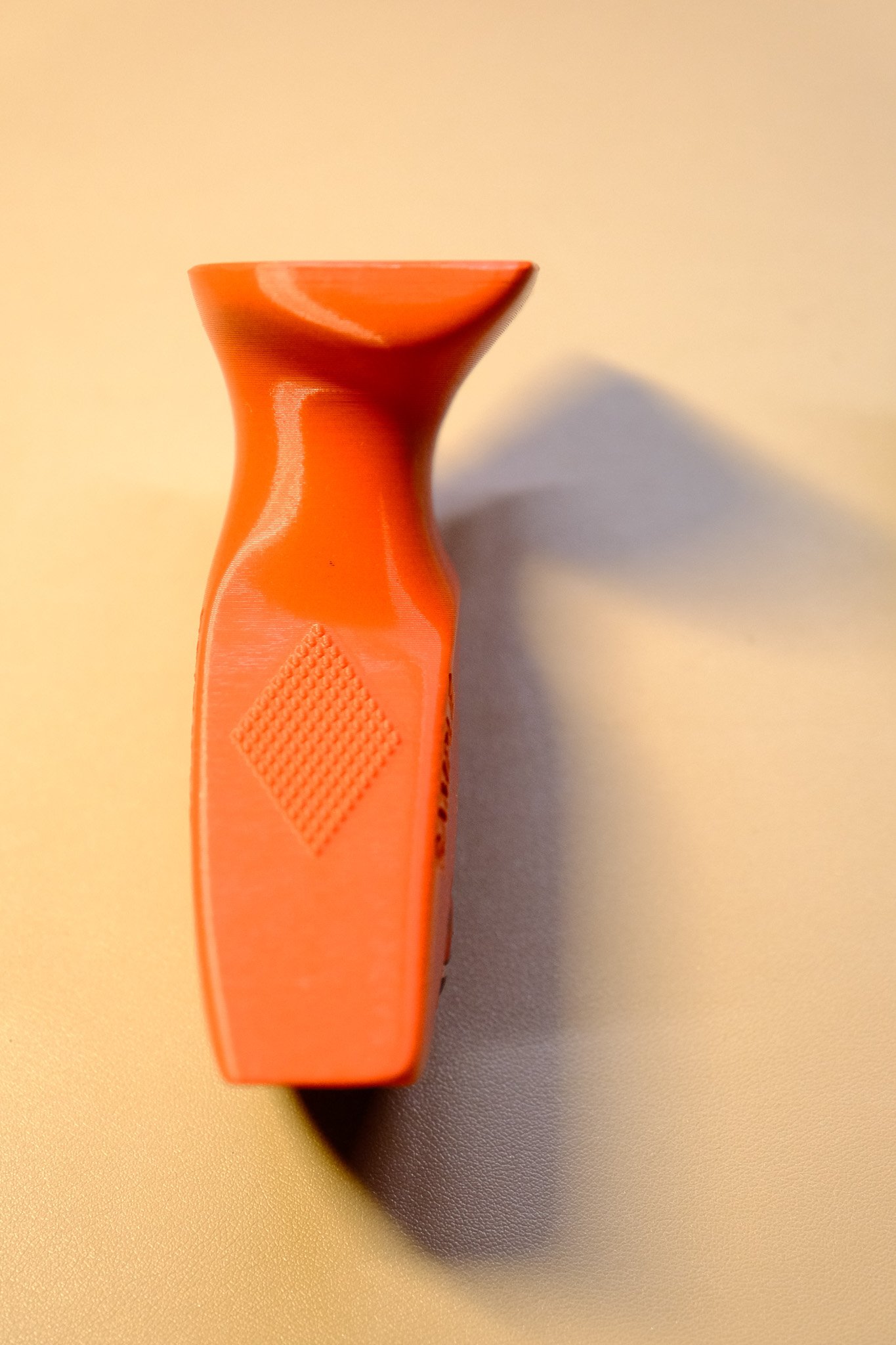
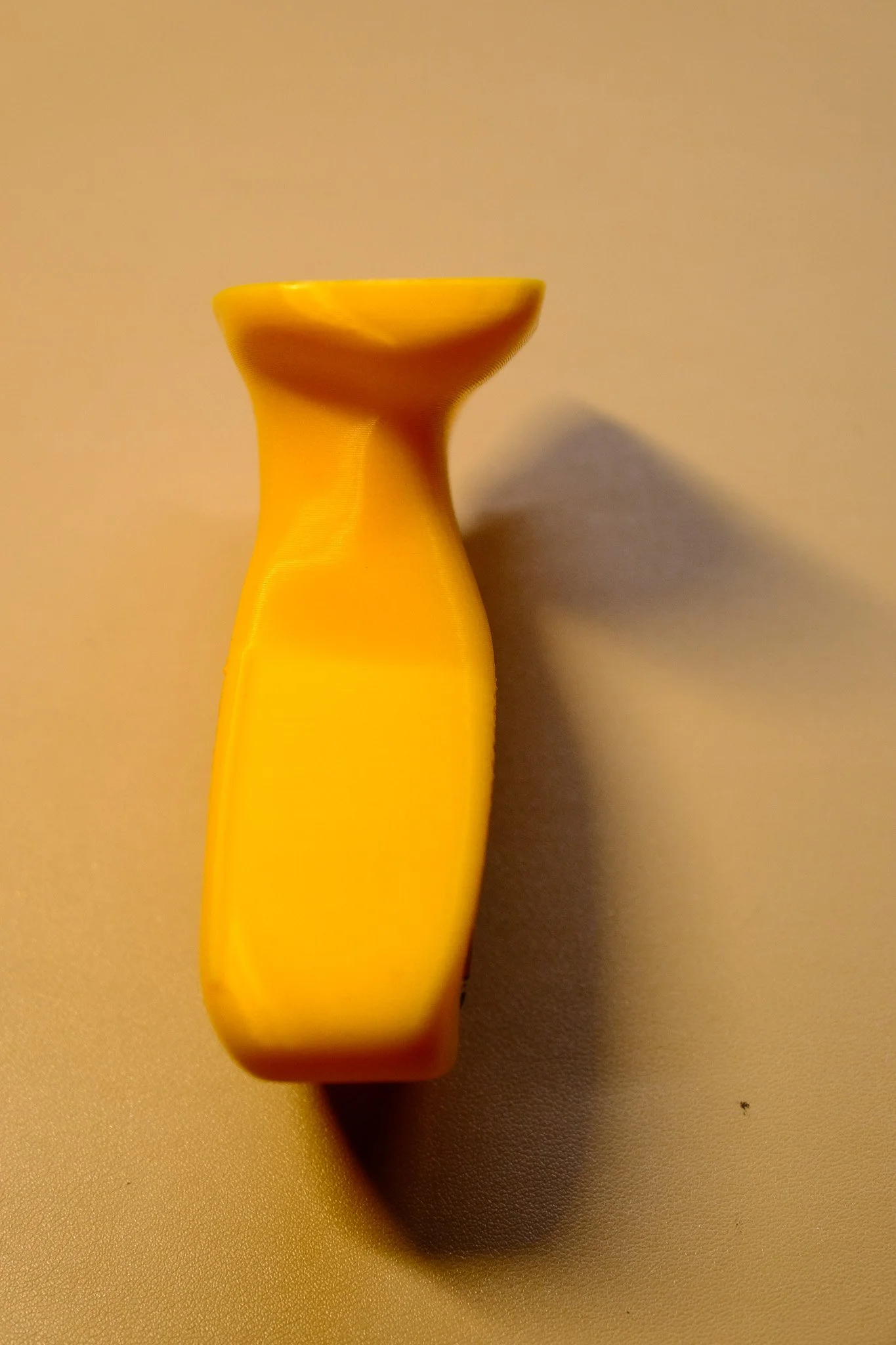
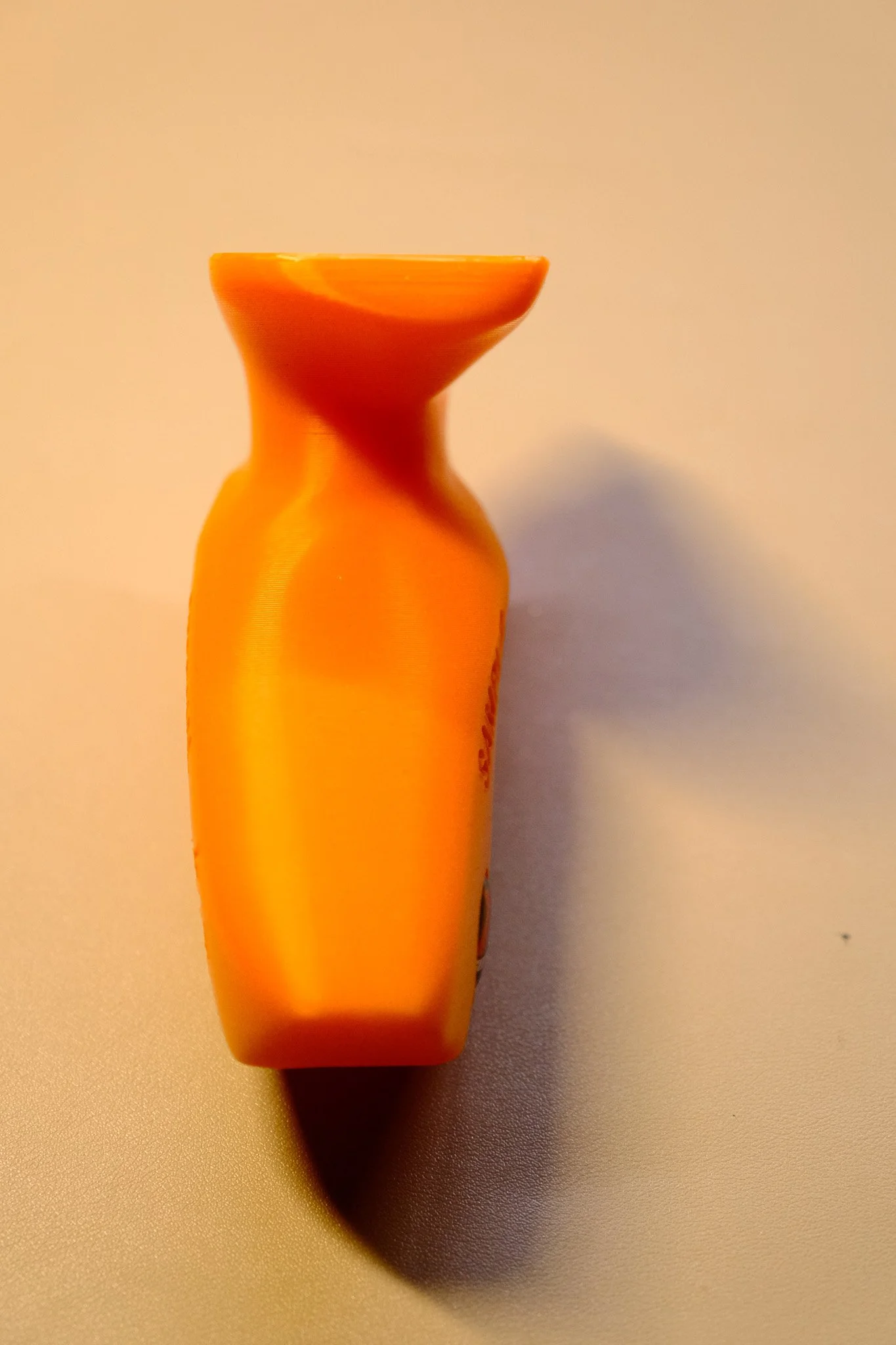
At the time of writing (December 2025), the following grips are available to try in store, all in their default design angles:
RH Plastic (For Mybo risers)
- Bumblebee (38°)
- Curve Eternal (46°)
- I Am Barebow (33°)
- I Am Compact (40°)
- I Am Recurve (38°)
- KNEETOS (38°)
- Master (38°)
Others:
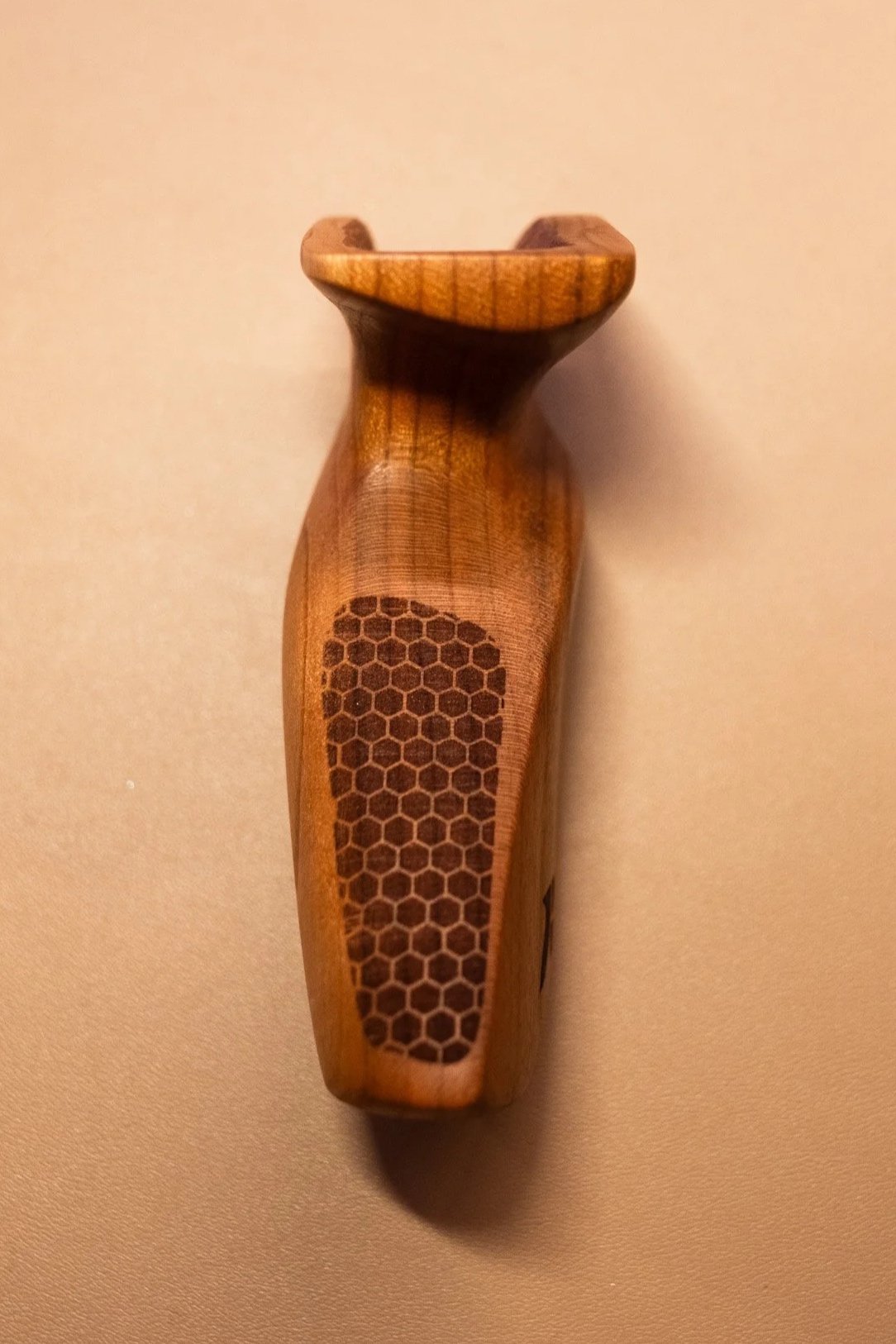
- Ye0 (RH Wood - Hoyt)
- Master (RH Automotive - Hoyt)
- I Am Recurve (RH glass - W&W ATF-DX)
- Master (LH glass - WNS)
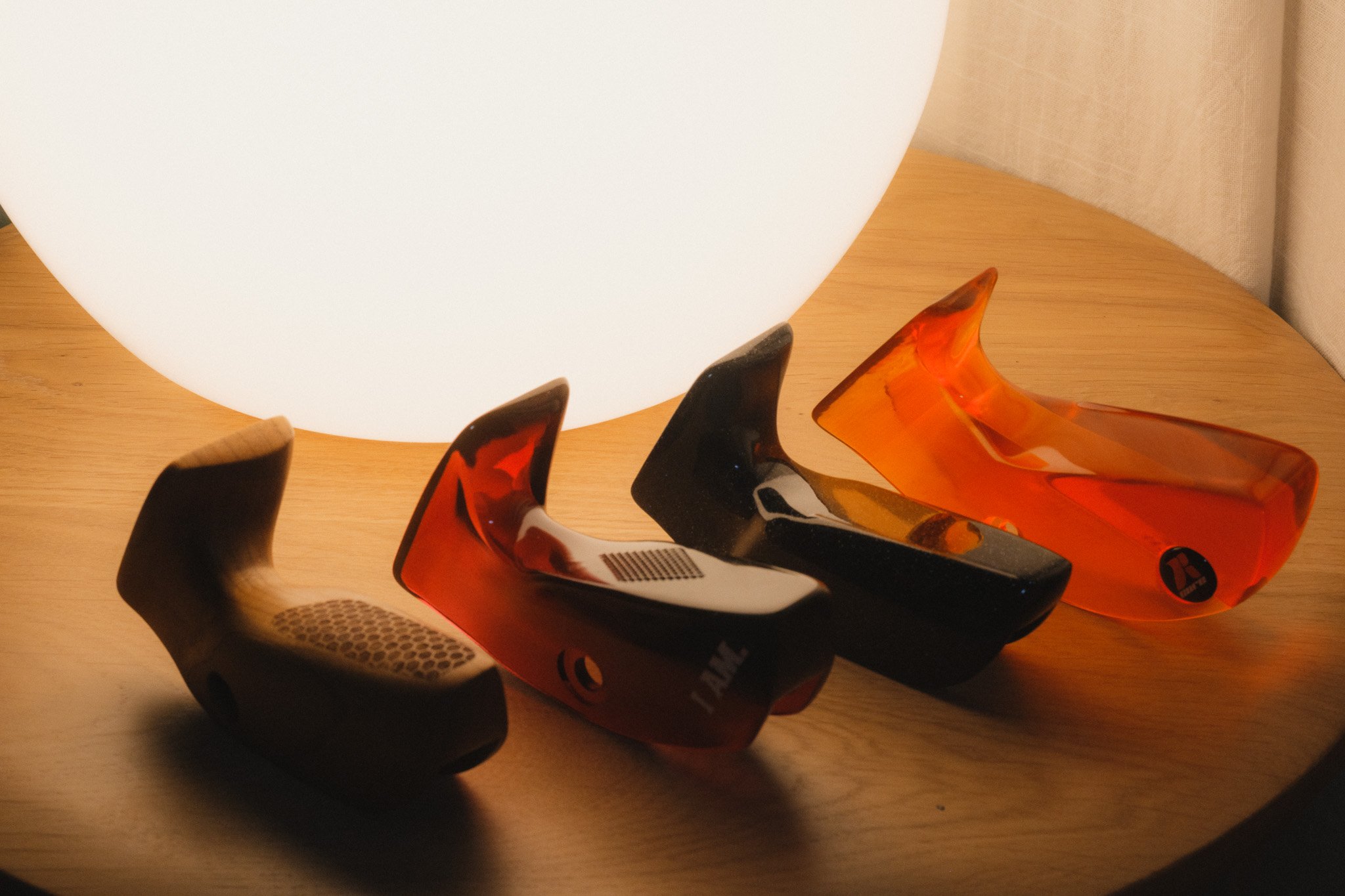
Other RCore grips available to try, that are not from the main sample pack
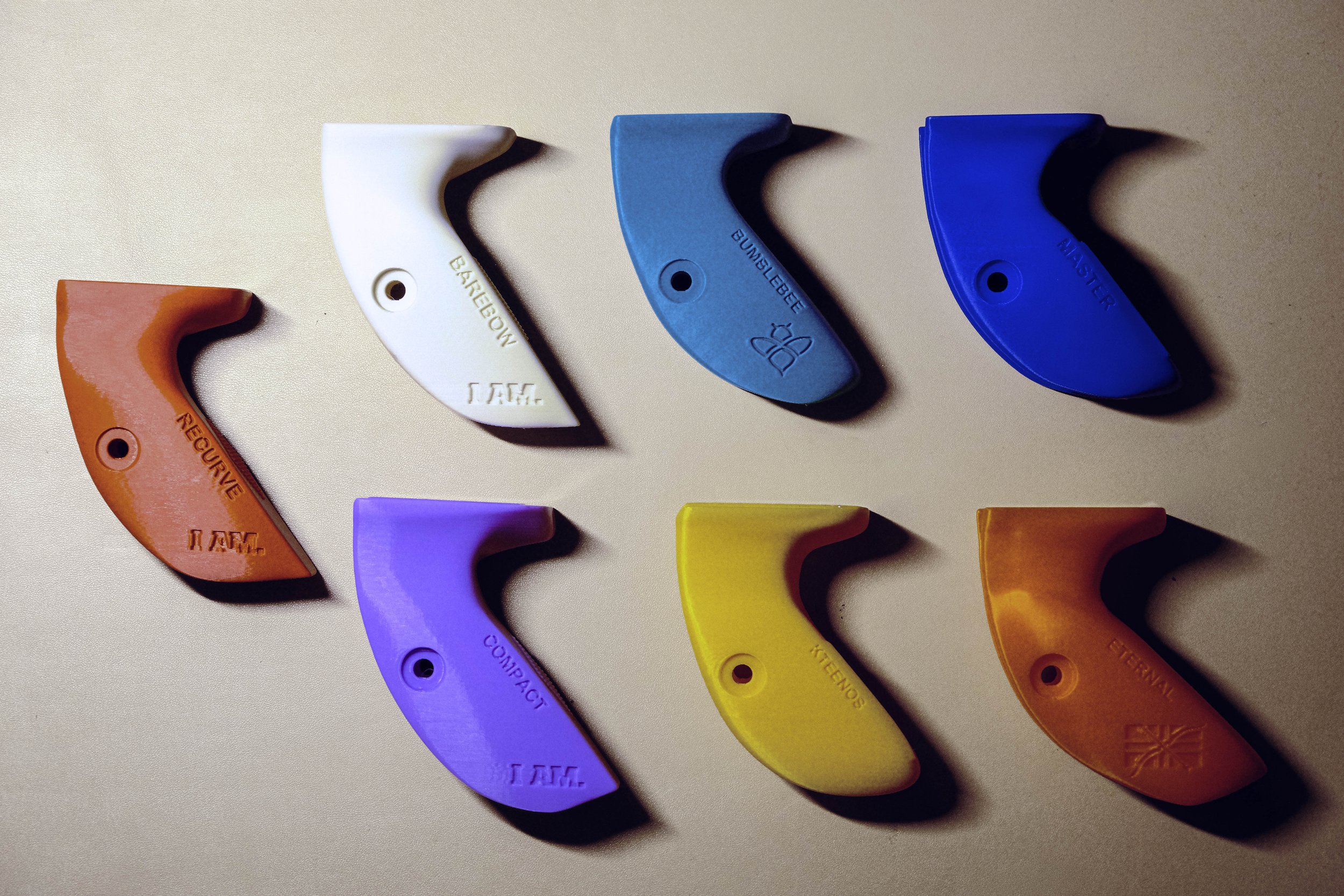
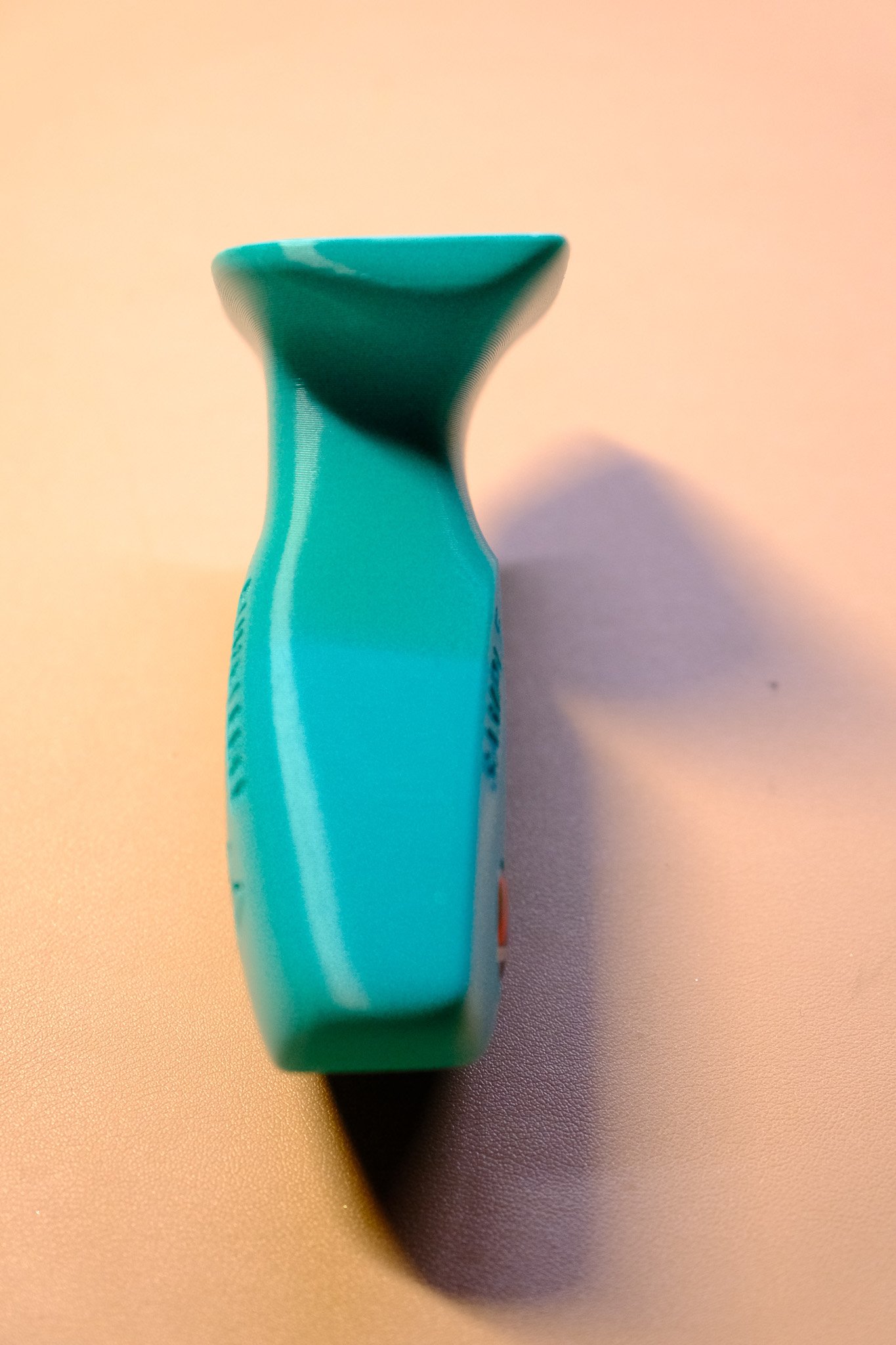
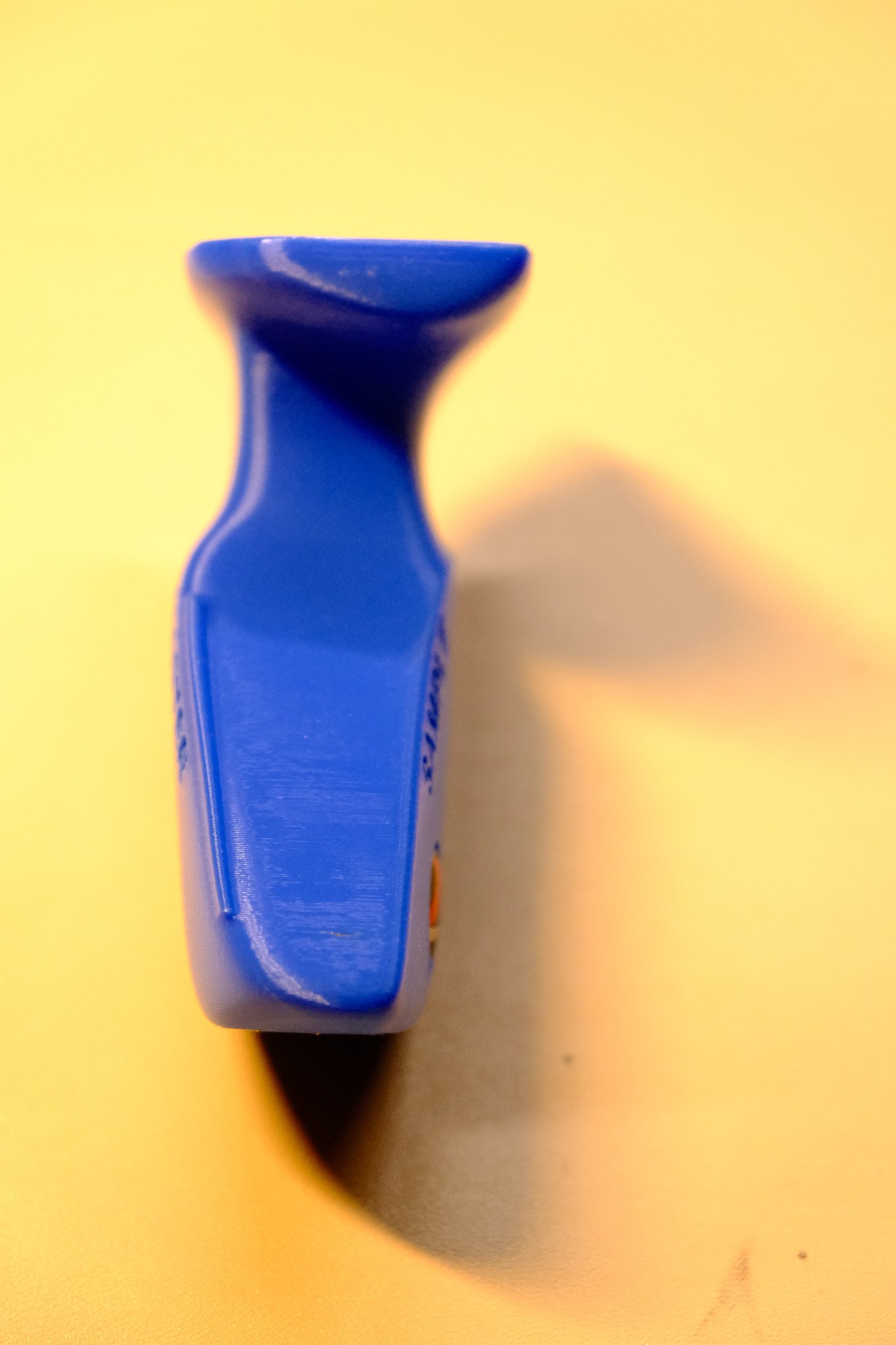
7 grips side by side
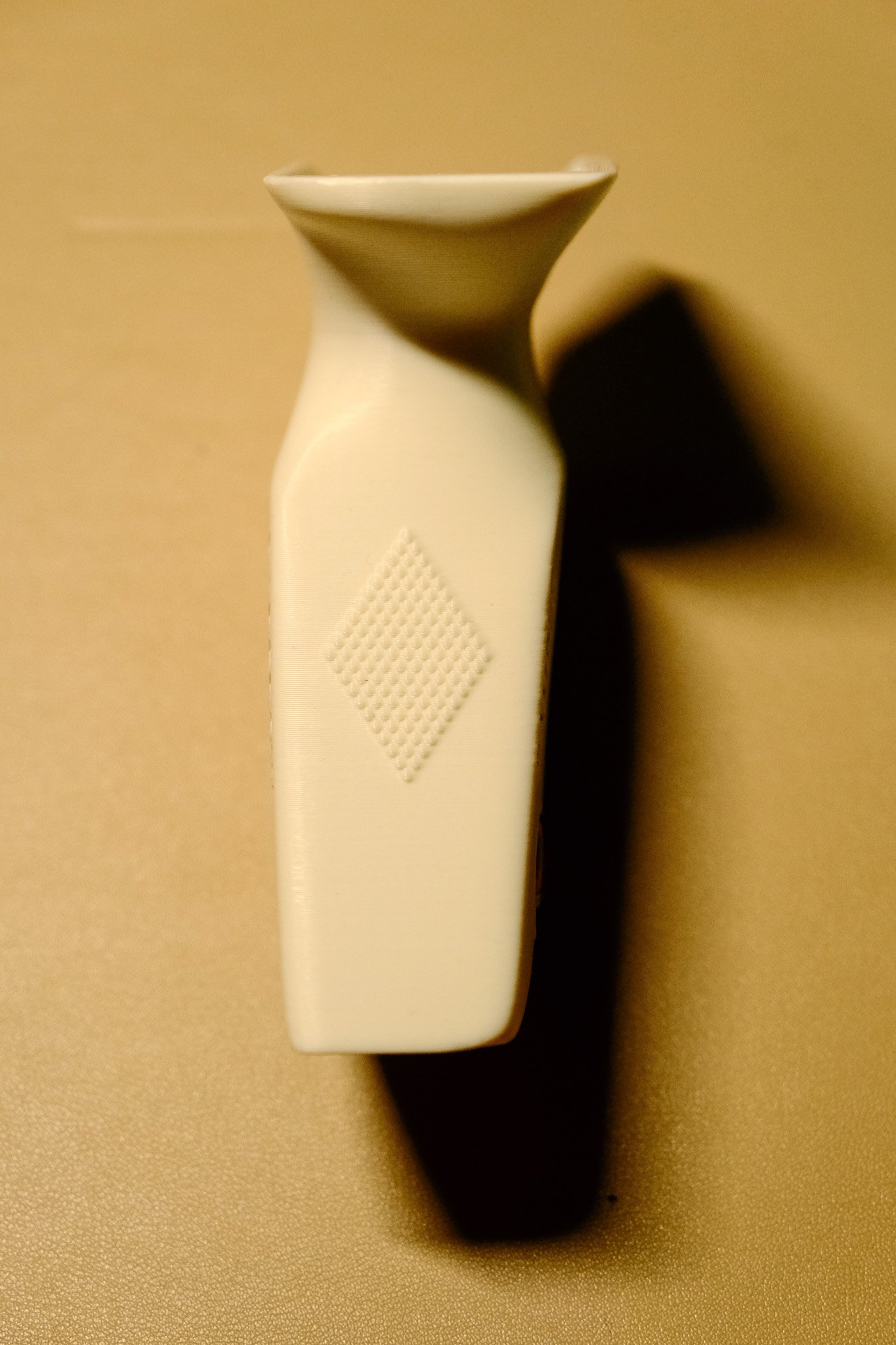
Criteria for choosing a suitable grip
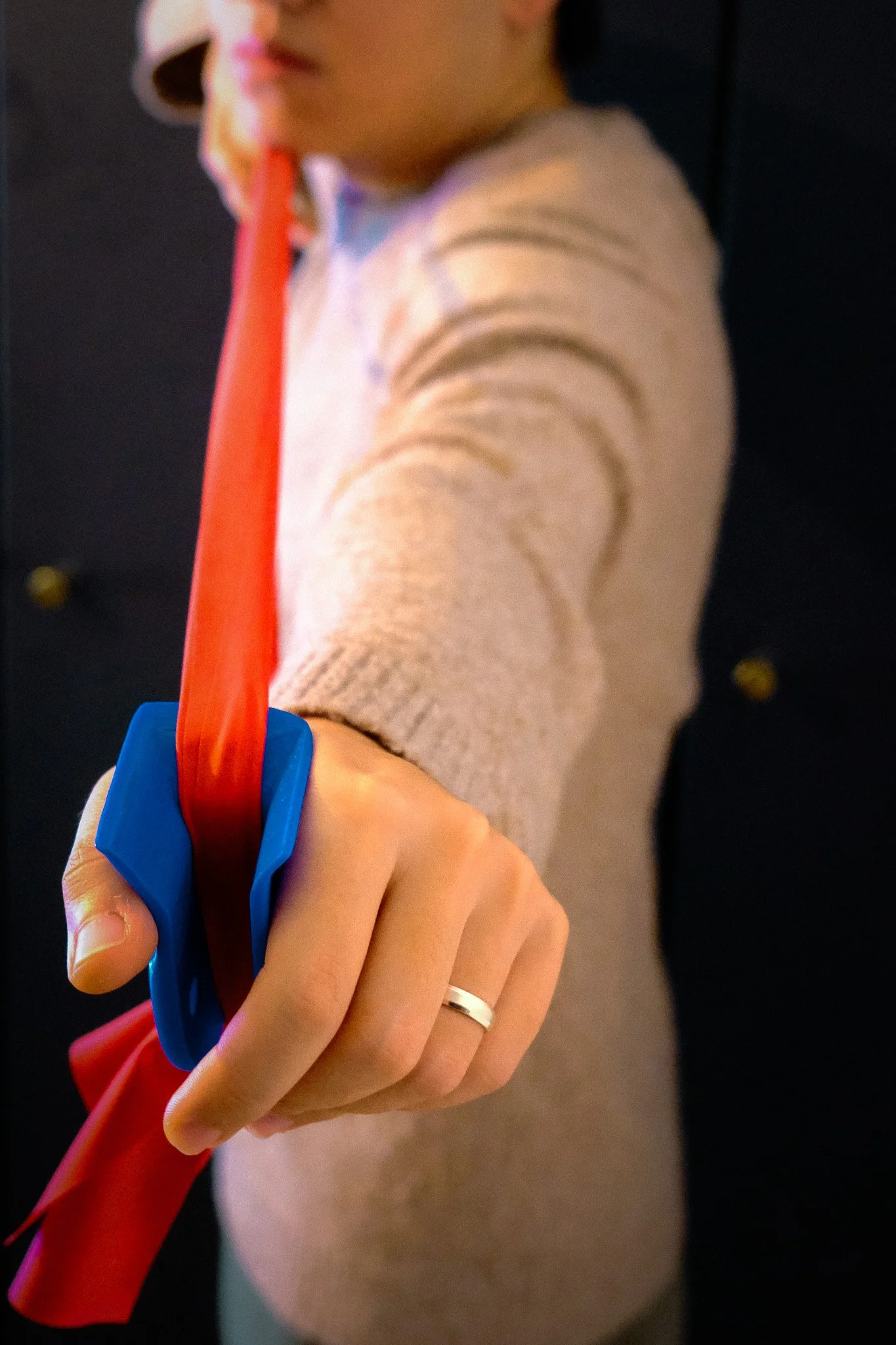
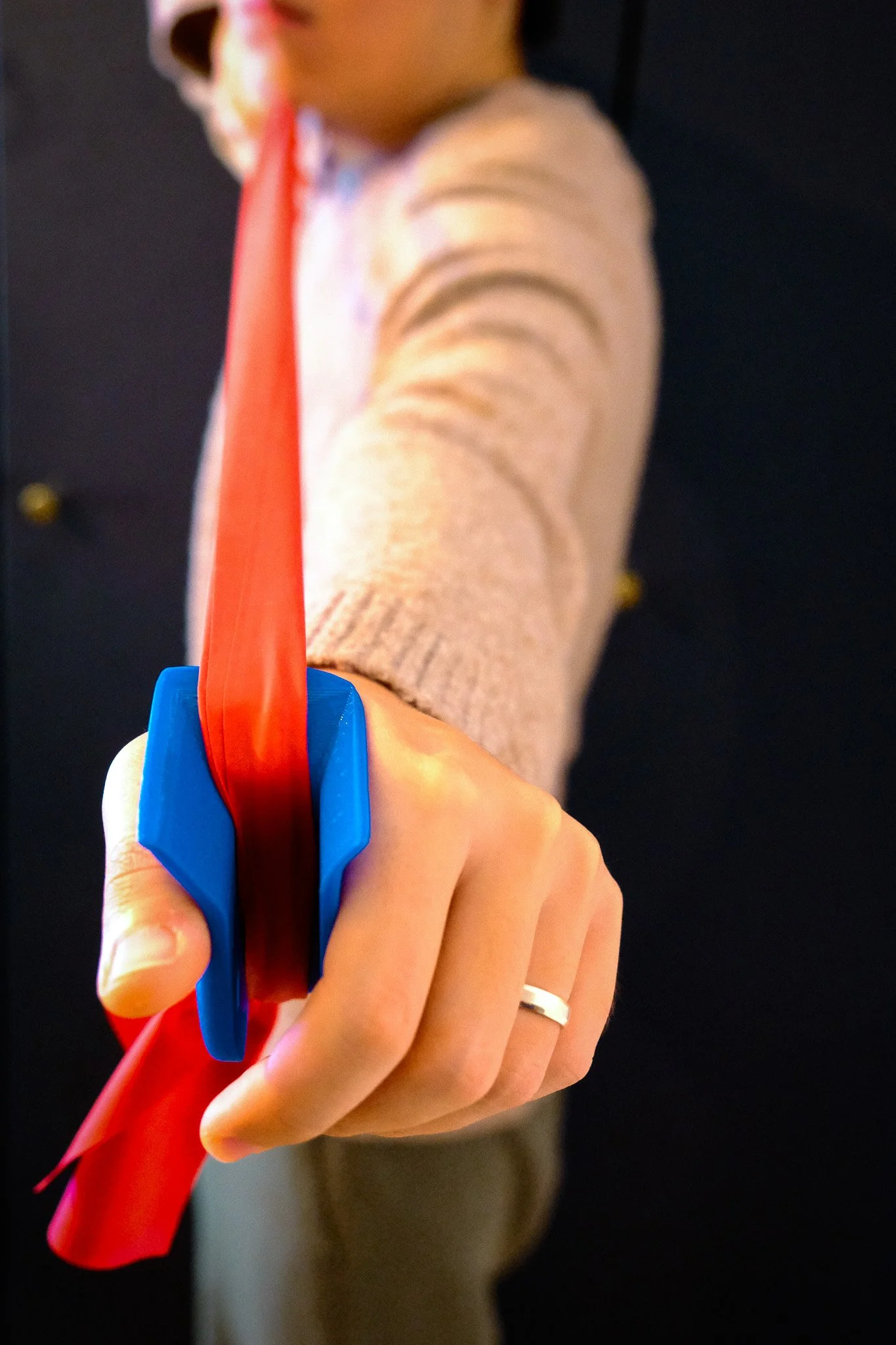
When trying a grip, the obvious choice may be to put it on your bow and shoot it, but many issues can be hidden by the mass of the bow. Instead, I personally recommend trying grips using a stretch band, as this is more revealing of how the grip reacts to your pushing technique. Below is my simple framework for testing a new grip.
1. Can you push straight with the grip
When pulling with a stretch band, check whether the grip tilts left or right. Some grips encourage pointing the thumb toward the target, while others promote a flatter push.
2. How easy is it to push straight
With time, archers can learn to adapt to a grip, but the purpose of buying an aftermarket grip is for it to suit your shooting style, not the other way around.
A suitable grip should:
make the correct pushing point easy to find
require minimal conscious correction
not demand extra wrist movement to stay straight
If you constantly have to “think” about where to push, the grip may not be right for you.
3. How stable is the hand to grip connection
At full draw (or simulated full draw with a band), lightly move your wrist while maintaining contact with the grip.
If the grip slides, shifts, or rotates easily, it’s a sign that:
the shape doesn’t match your hand
or the contact area lacks sufficient support
A suitable grip should feel locked in, without relying on tension or squeezing.
A quick glossary on terminology:
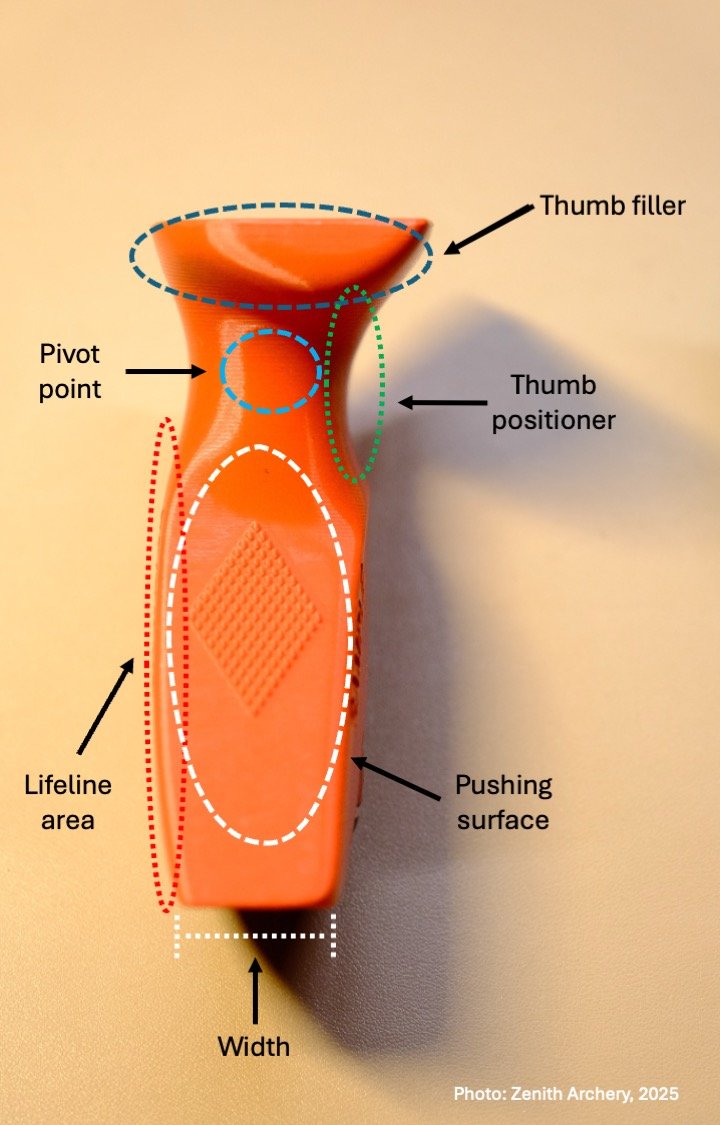
Before going more in depth, let’s make sure we are on the same page on what I am describing. Here are some features I will be discussing regarding grip design:
Anatomy of the grip
Pushing surface – the primary contact area where force is applied
Pivot point / throat – the deepest point of the grip
Lifeline area – the ridge or edge aligning with the palm lifeline
Thumb positioner – shaping feature that guides where the thumb sits on the grip
Thumb filling – material added near the web of the hand, reducing the gap between the top of the grip and the thumb–index webbing
Grip angle – the angle between the grip and riser, influencing wrist demand
Overview of RCore grips:
Bumblebee
Features:
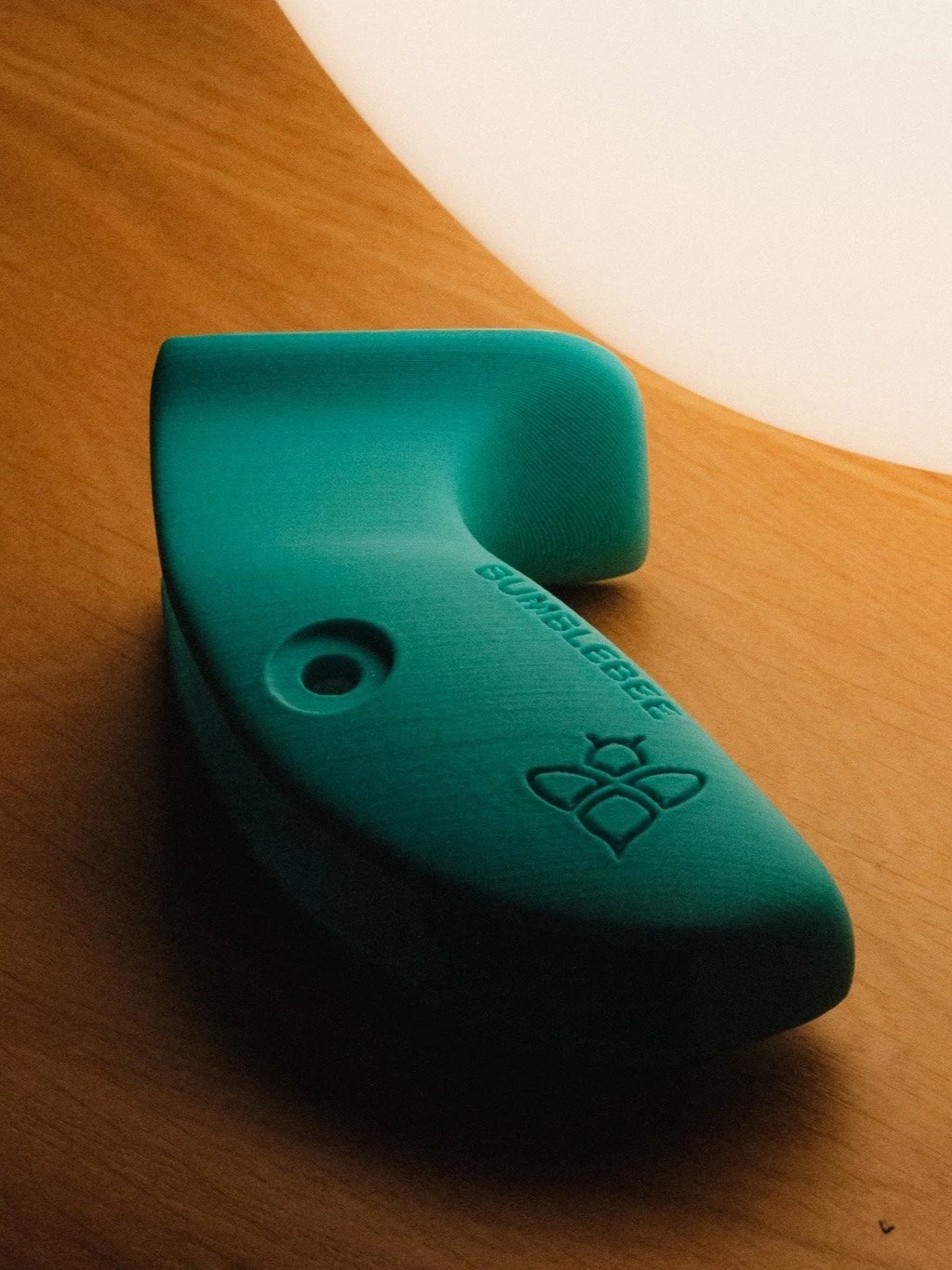
The Bumblebee grip is an easygoing grip, as it is quite easy to find the correct and comfortable hand placement.
The pushing surface, is slightly rounded, with a standard width. It features a slight indent on the thumb area to help archers correctly direct their push with the thumb.
On the lifeline area, there is a slight curvature, and it tapers downwards. Finally, it also features some filling area above the throat, for a tighter fit.
The pivot point/ throat of the grip is fairly standard, not particularly high or low, so no extra considerations required when it comes to bow tuning.
Best for:
Archers seeking comfort, forgiveness, and an easy transition
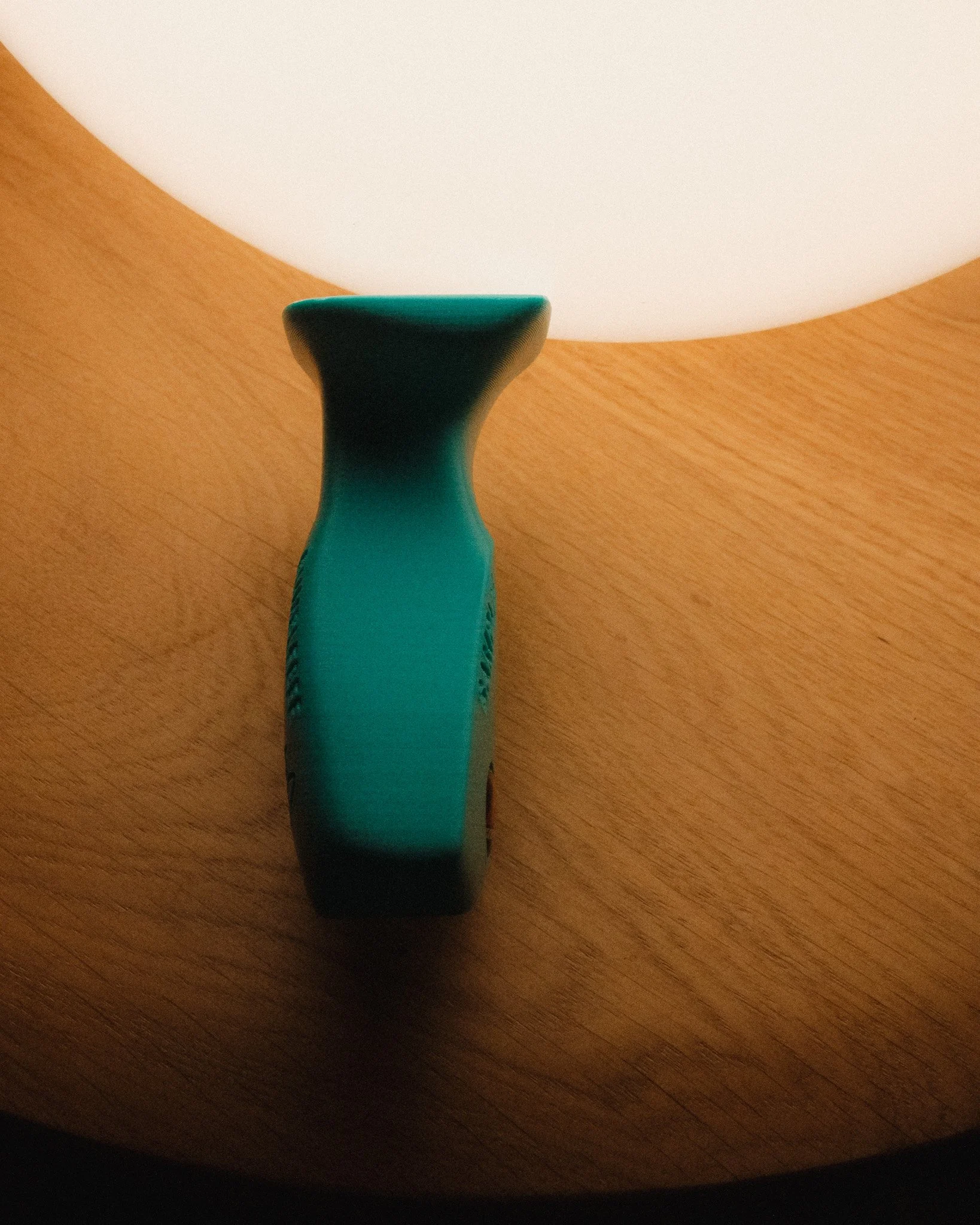
2. Curve Eternal
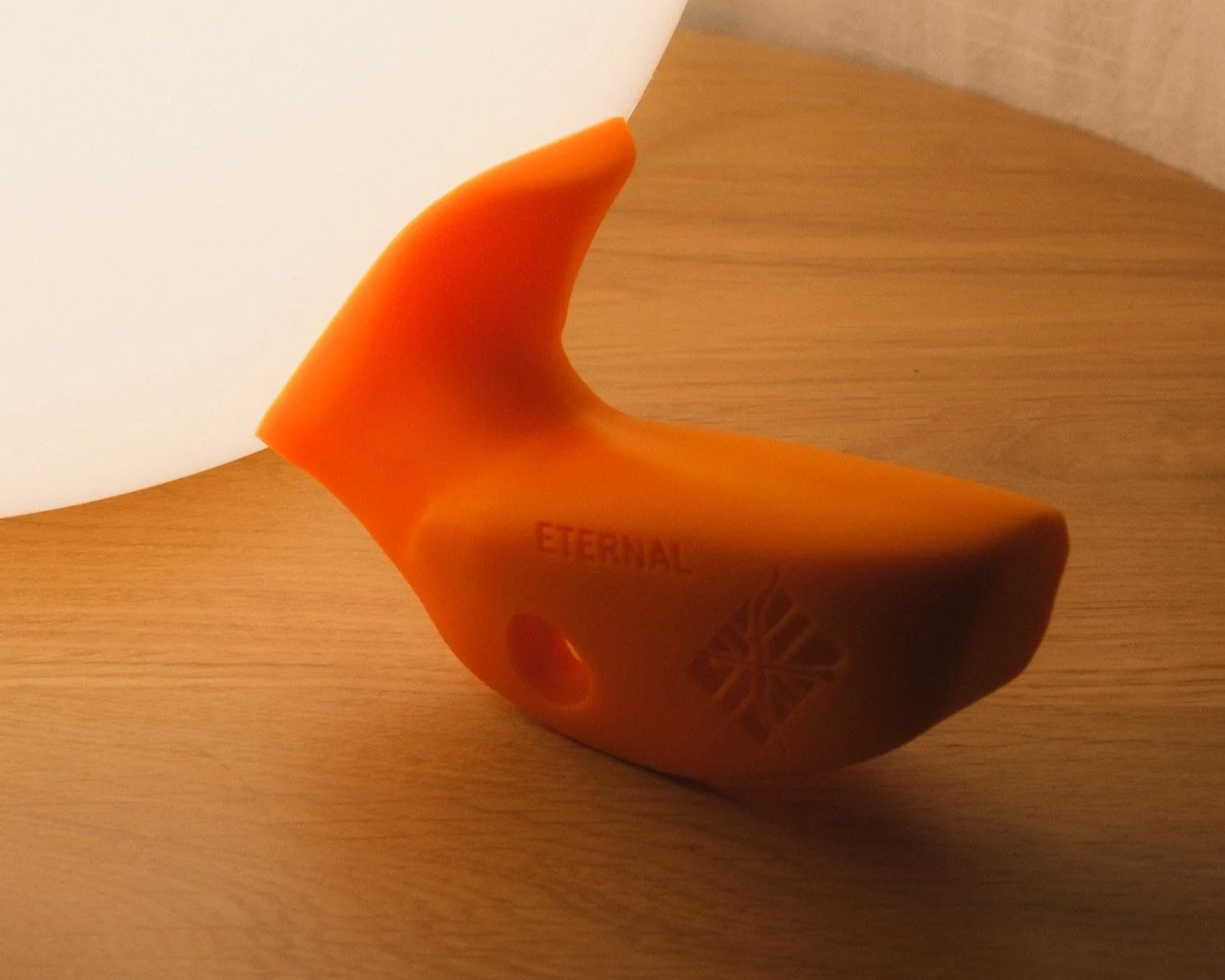
Features:
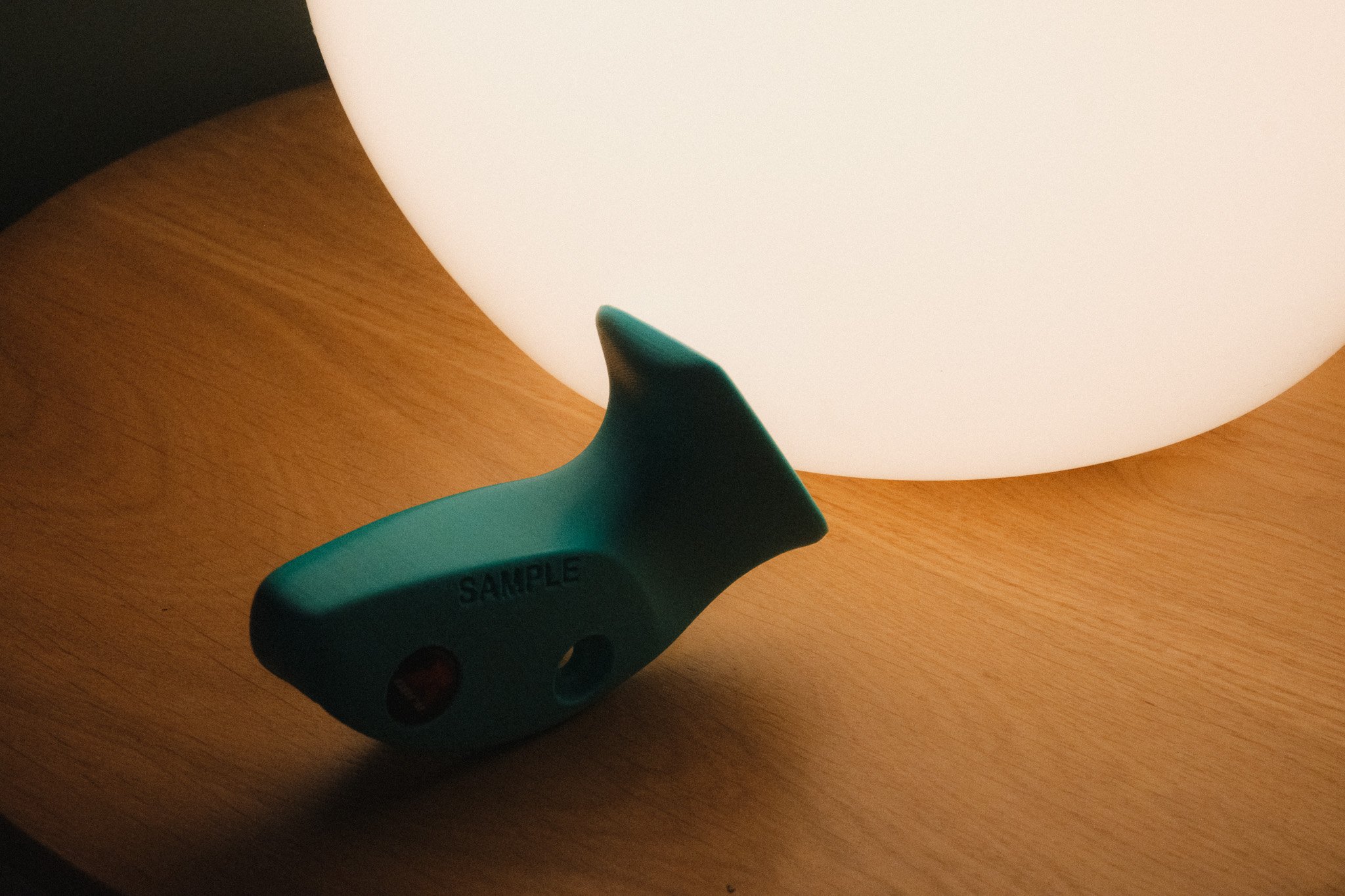
This grip is the most distinctively different compared to other grips in the sample set.
The first distinctive design element of this grip is how wide and curved the pushing surface is. The pivot point has also been noticeably lowered.
Despite the wide pushing area, it is rather easy to locate the pushing point, especially horizontally, as the centre of the grip protrudes out more due to the curved surface.
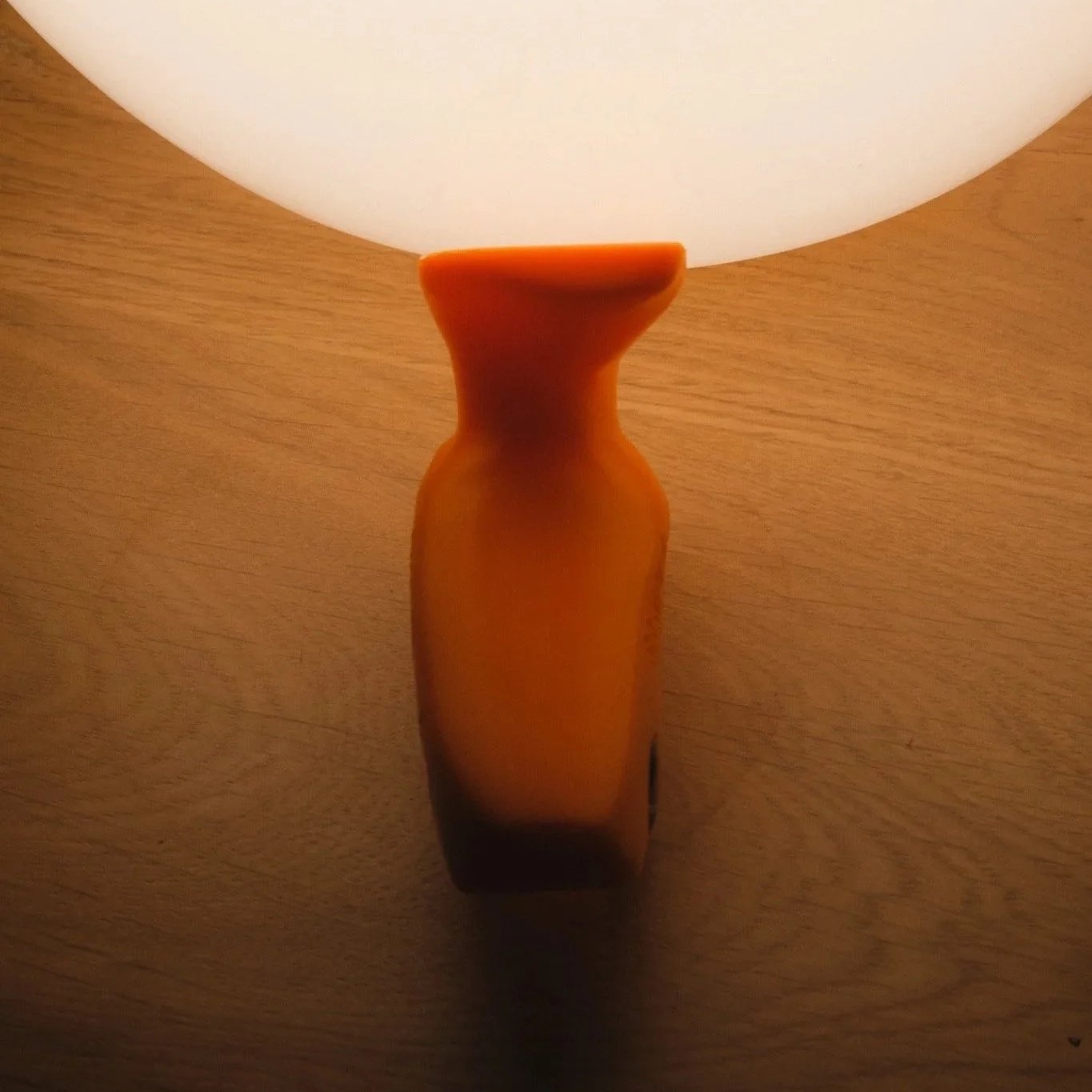
The lifeline area, as per the grip’s design philosophy, features a very rounded curve, which slims and slightly tapers downwards.
There is a clear thumb and index finger positioner, which provides the archer with a very consistent hand placement.
Finally, there is a good amount of thumb filling area, so that the web of the hand should not move around too much once the hand is set onto the grip.
It’s also worth noting that this grip has the highest default angle among all the RCore grips, at 46°, making it more demanding on the archer’s bow shoulder.
Best for:
Experienced archers who prefer a locked-in, repeatable setup and can comfortably manage higher grip angles.
3. I Am Barebow
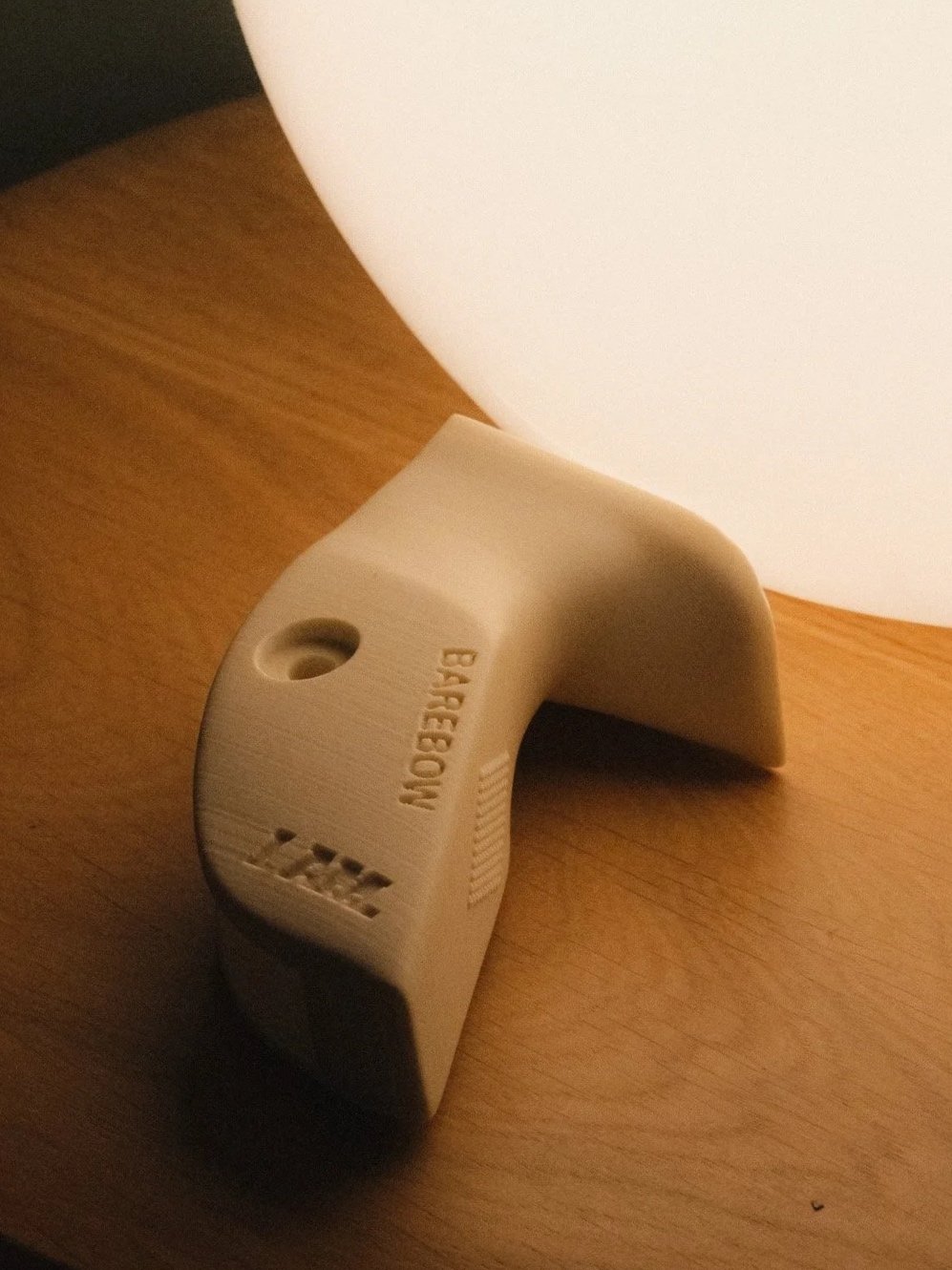
Features:
This grip is designed by Jake Kaminski with barebow in mind. Given this design philosophy, the pushing surface is wide and flat. It also features a low angle (33° default) to accommodate for string-walking, reducing pressure differences across different crawls when shooting varying distances.
The thumb positioner is regular, with not a lot of indent to promote the “pointing with thumb” style shooting. There is a bit of thumb filling towards the top of the grip, which reduces the gap between the throat and the top to allow for a better fitment on most hands and a firmer contact.
Furthermore, the pivot point is also slightly lower compared to the other grips, to accommodate more weight on the bow.
The lifeline area is very straight and sharp, with no taper and just a straight line down. Compared to the lifeline ridge option, featured on grips such as Master and Kteenos, the lifeline area on the I Am Barebow grip provides clearer feedback on hand placement.
Best for:
Barebow archers prioritising consistency across distances and crawls.
4. I Am Compact
Features:
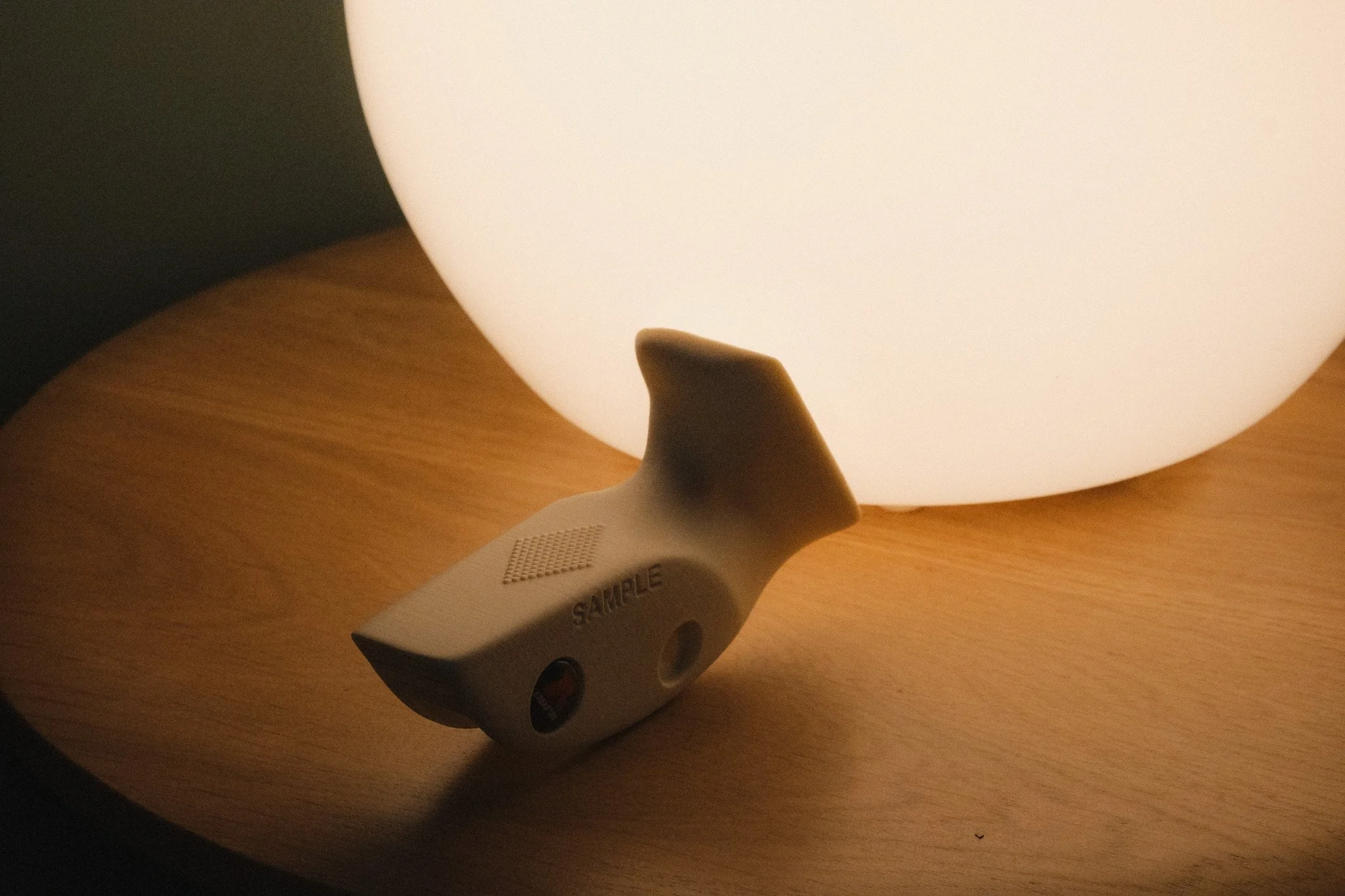
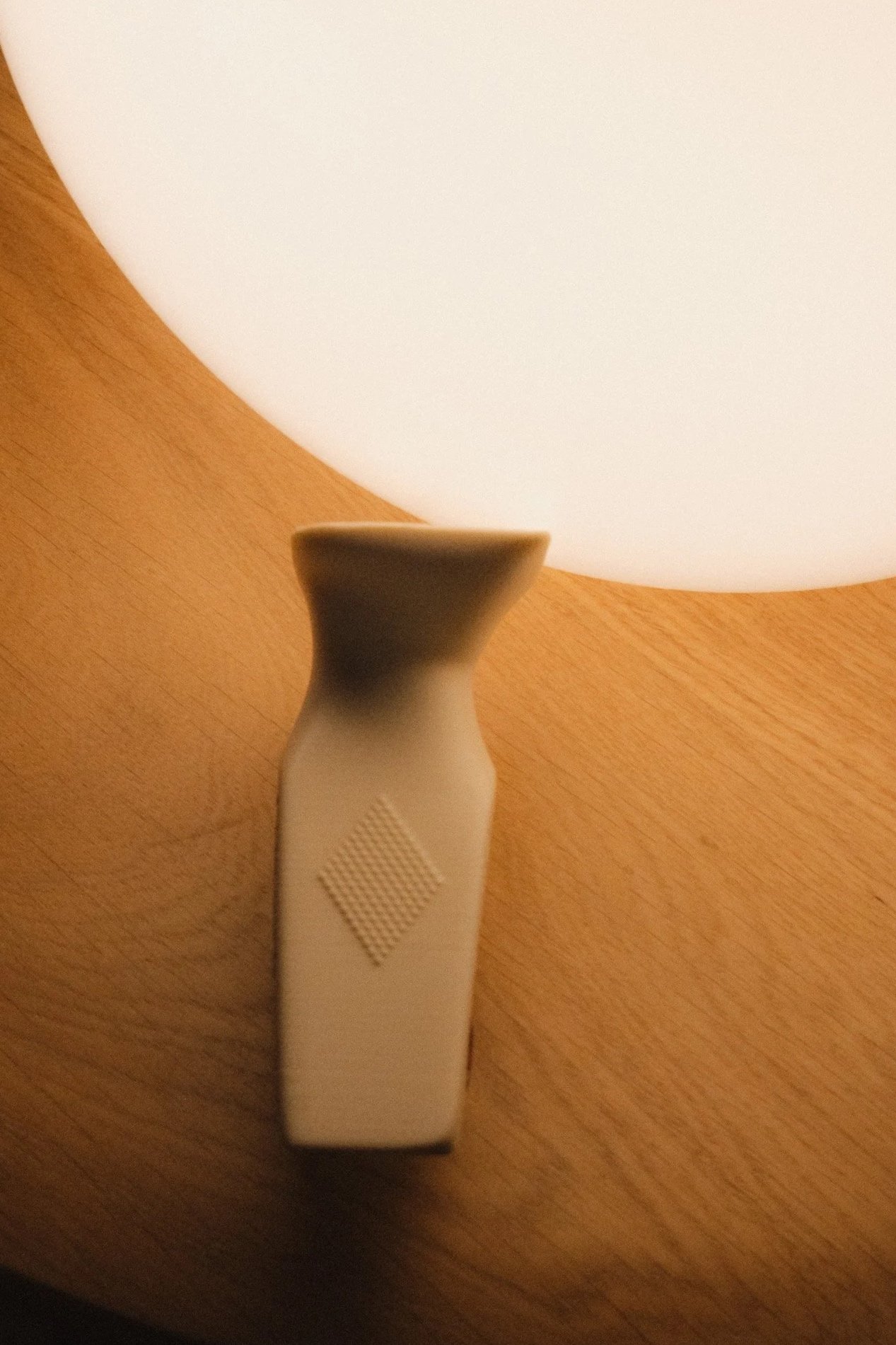
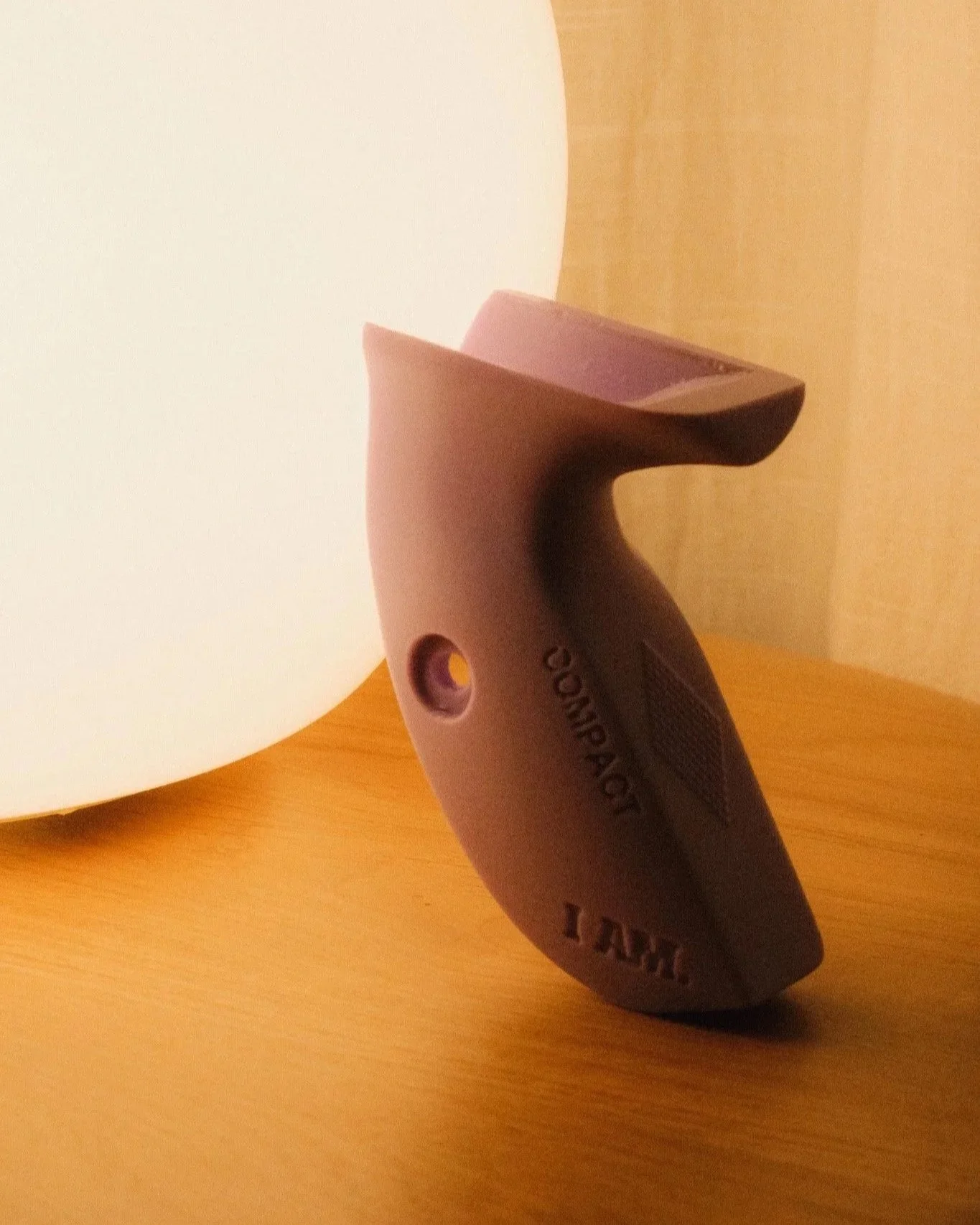
As the name suggests, this grip is designed to fit archers with small hands. The pushing surface is very flat, with a very slight slant towards the thumb side. The pushing surface is wide, with a deep thumb positioner.
Crucially, there is a tighter gap between the top of the grip and the pushing surface.
When the grip is too big for the archer’s hand, there are more possible hand placement positions, and it becomes more difficult to be precise with the correct pushing point and keep the push straight. When the pivot point is too wide, the hand can slide side-to-side.
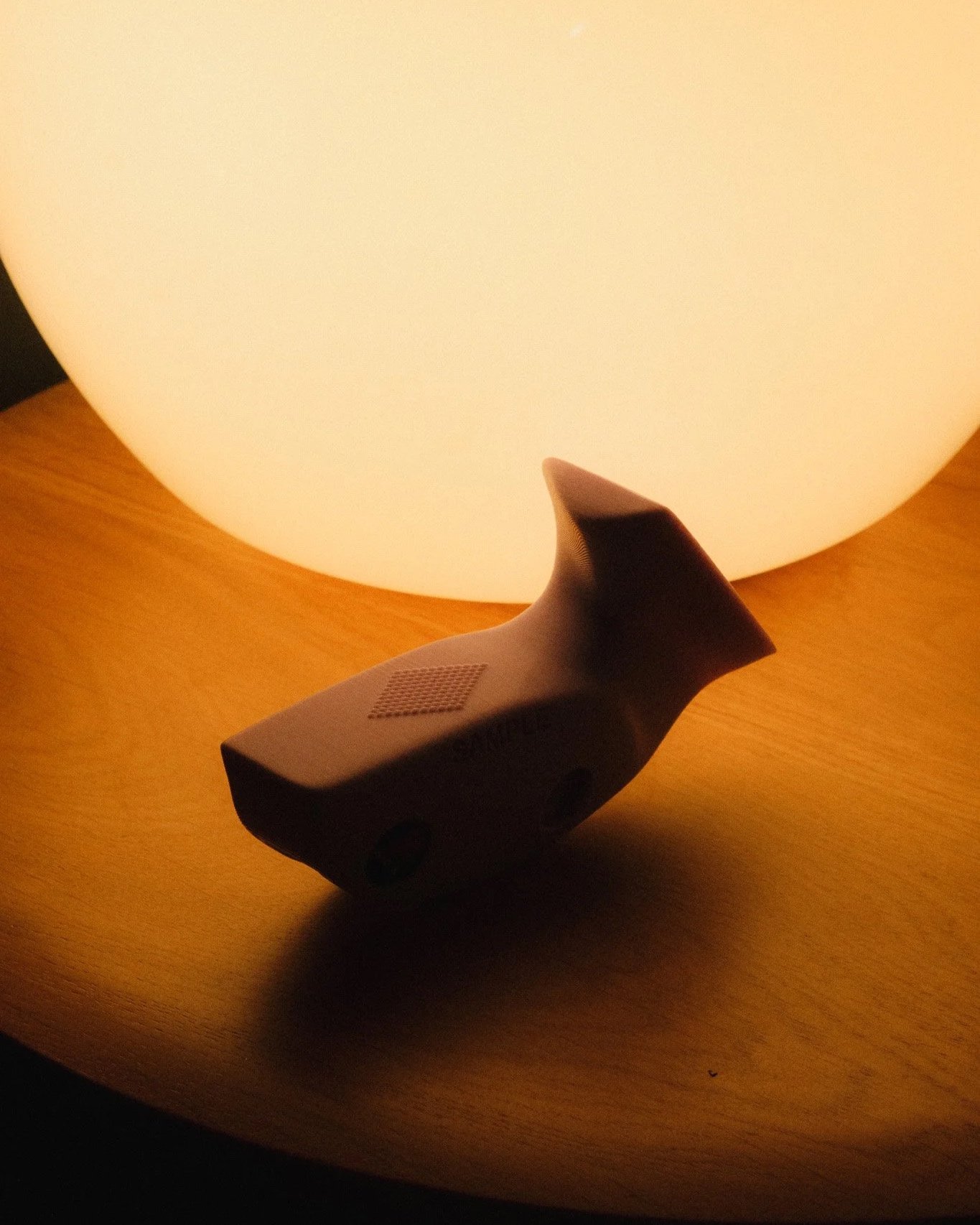
The design solution here is to tighten the gap between the top of the grip and the pushing surface.
Combined with the wide pushing surface, this grip should fit archers with small hands like a glove, making it close to impossible to move or slide the hand.
Important note:
If you feel pinching in the web of the hand, this grip may be too small. This is one grip I strongly recommend trying before buying
5. I Am Recurve
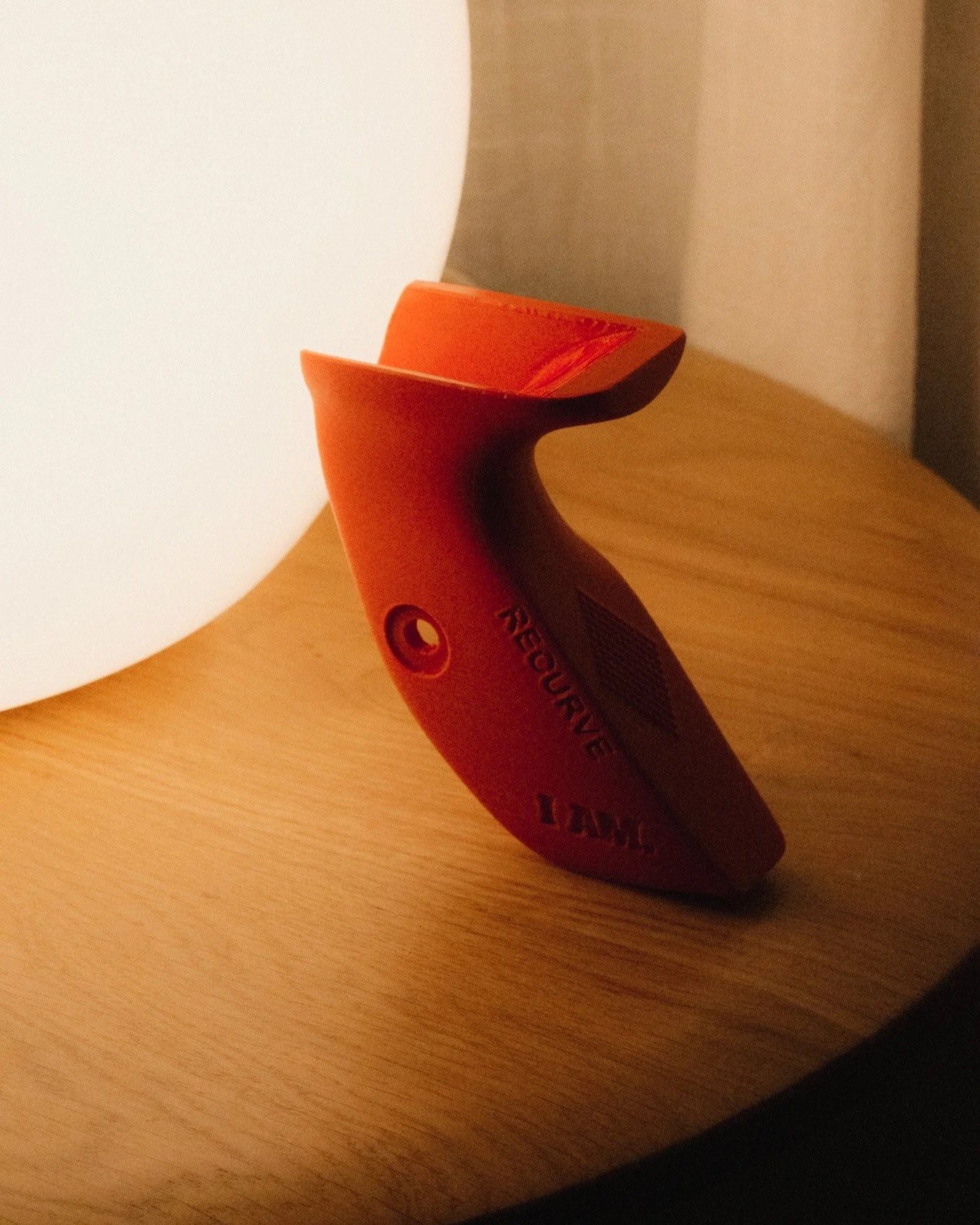
Being a Jake Kaminski grip, it shares a few design philosophy with his I Am Barebow and I Am Compact grips. This also shares a lot of features with Hoyt grips.
The pushing surface is flat, with a sharp lifeline edge, but now with a very slight downward taper. There’s also some thumb filling area for tighter hand fitment.
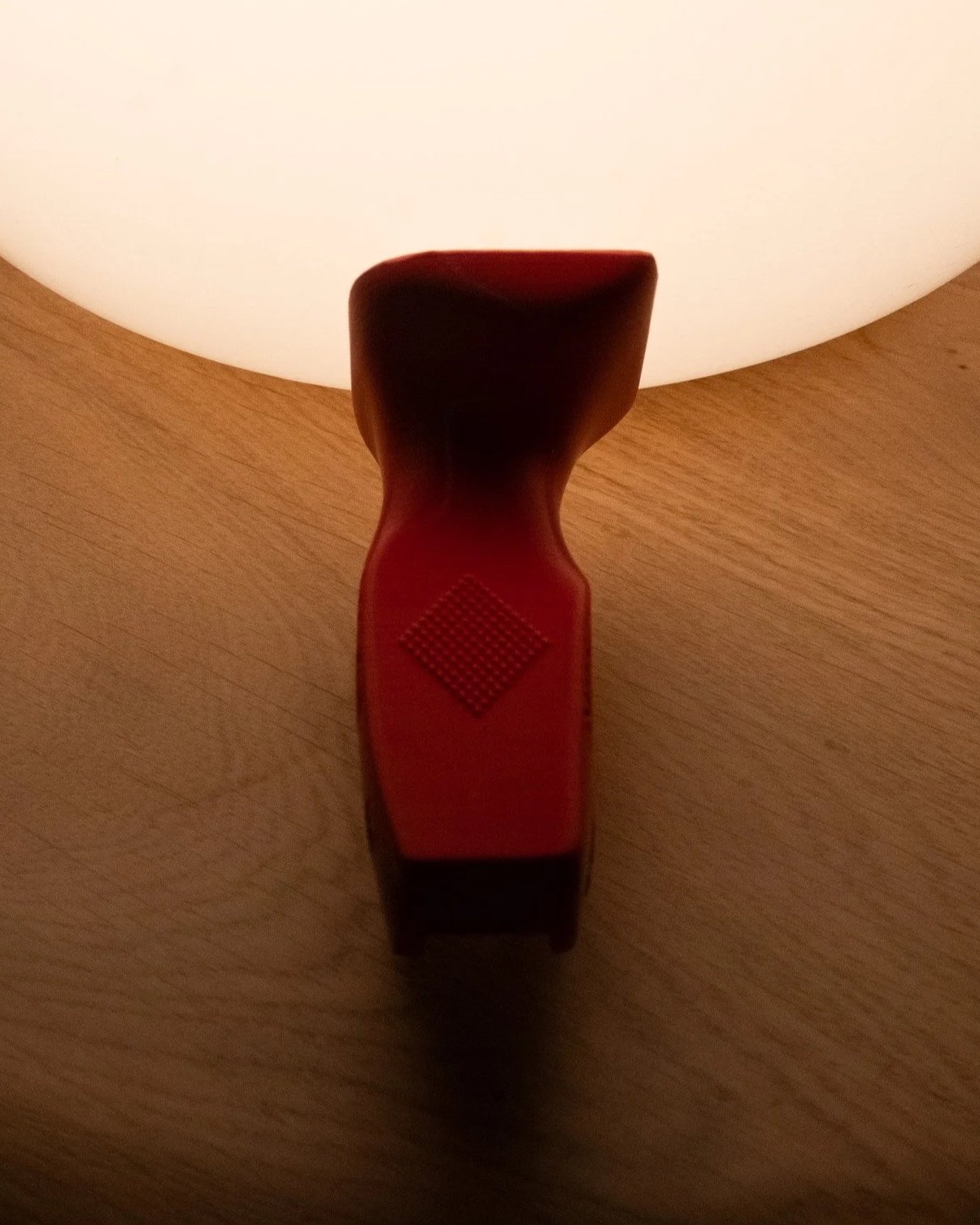
Compared to the other Kaminski grips, the width is slimmer, while the thumb positioner and pivot point are quite regular.
Given the features, this is suitable for archers of all hand sizes. The flat pushing surface also would lead to lower torque regardless of the archer’s pushing technique. The sharp lifeline edge provides clear feedback for consistent hand placement as well.
Best for:
Archers seeking low torque, clear feedback, and broad compatibility.
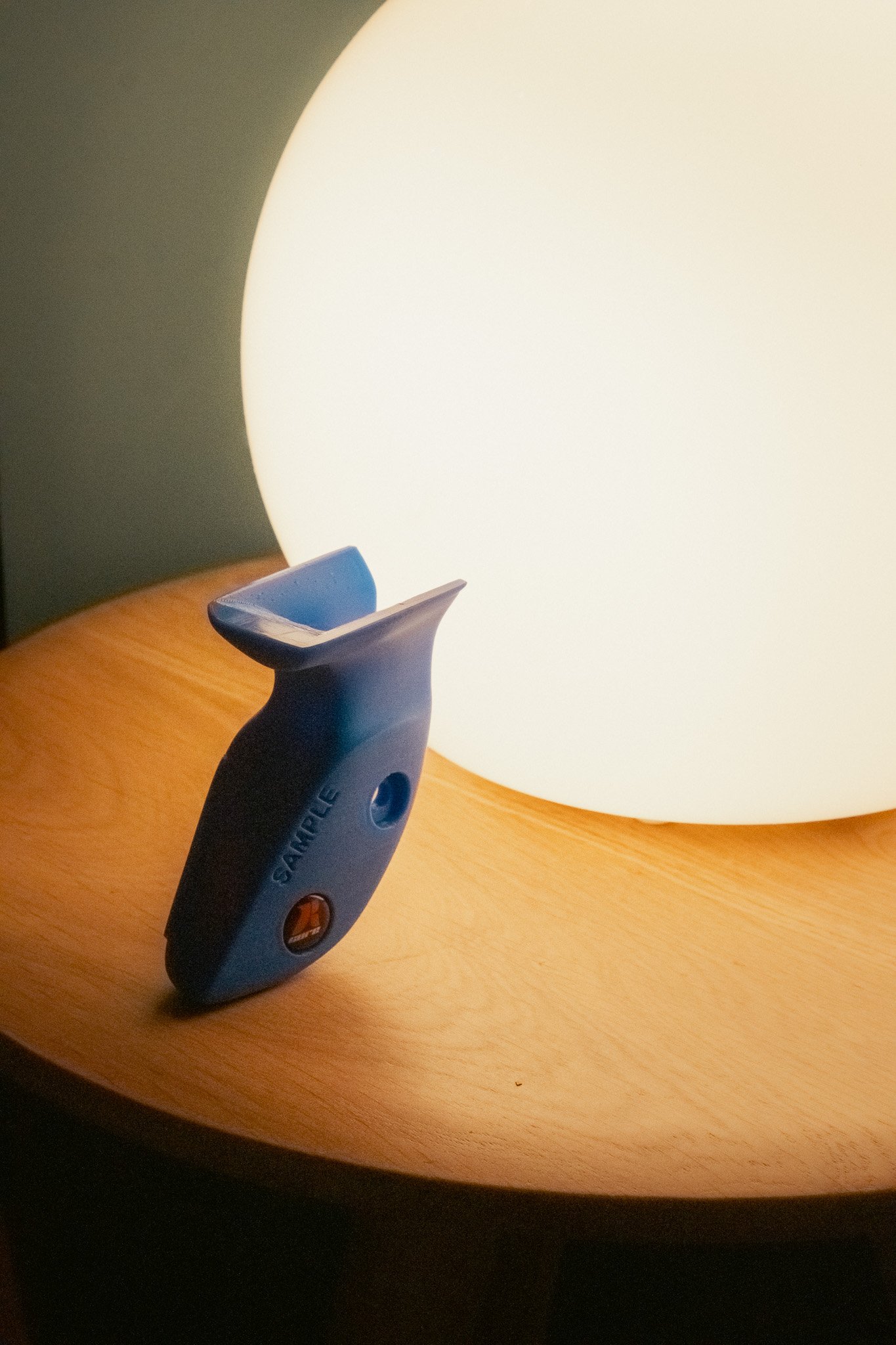
6. The Master
Features:
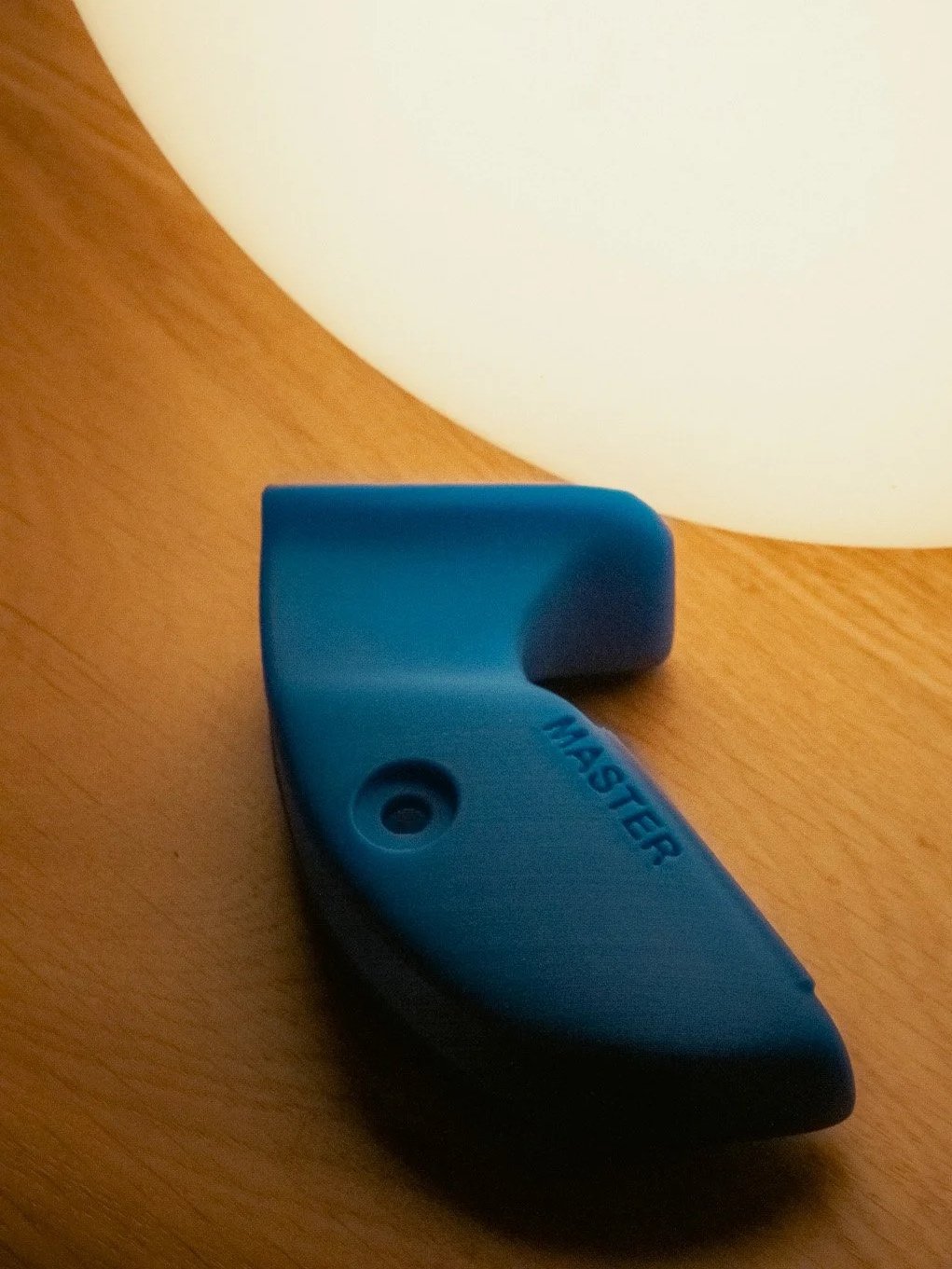
The Master is easily one of RCore’s most popular grip designs, with a few key features that stand out.
The pushing surface is flat and slim, with a slight slant on the palm area, which allows for the thumb to be pointed more towards the target, while nudging the archer to set the hand pressure closer to the thumb side, reducing torque from inconsistent thumb pressure.
On the lifeline area it features the signature “lifeline ridge” - a defined edge, which has a 0.7mm protrusion to provide a tactile feedback on the hand placement, and a downward taper.
The pivot point is also slightly lowered, so there could be tuning implications.
The Master also features a deep thumb positioner. Combining that with slanted pushing surface, this grip encourages the “pushing with the thumb” KSL-style shooting. The default angle is 38°, making it a medium grip. Therefore, if you are a recurve archer pushing KSL-style like Brady Ellison, this is the grip for you.
Best for:
Recurve archers using a thumb-driven KSL-style push.
7. Kteenos
Features:
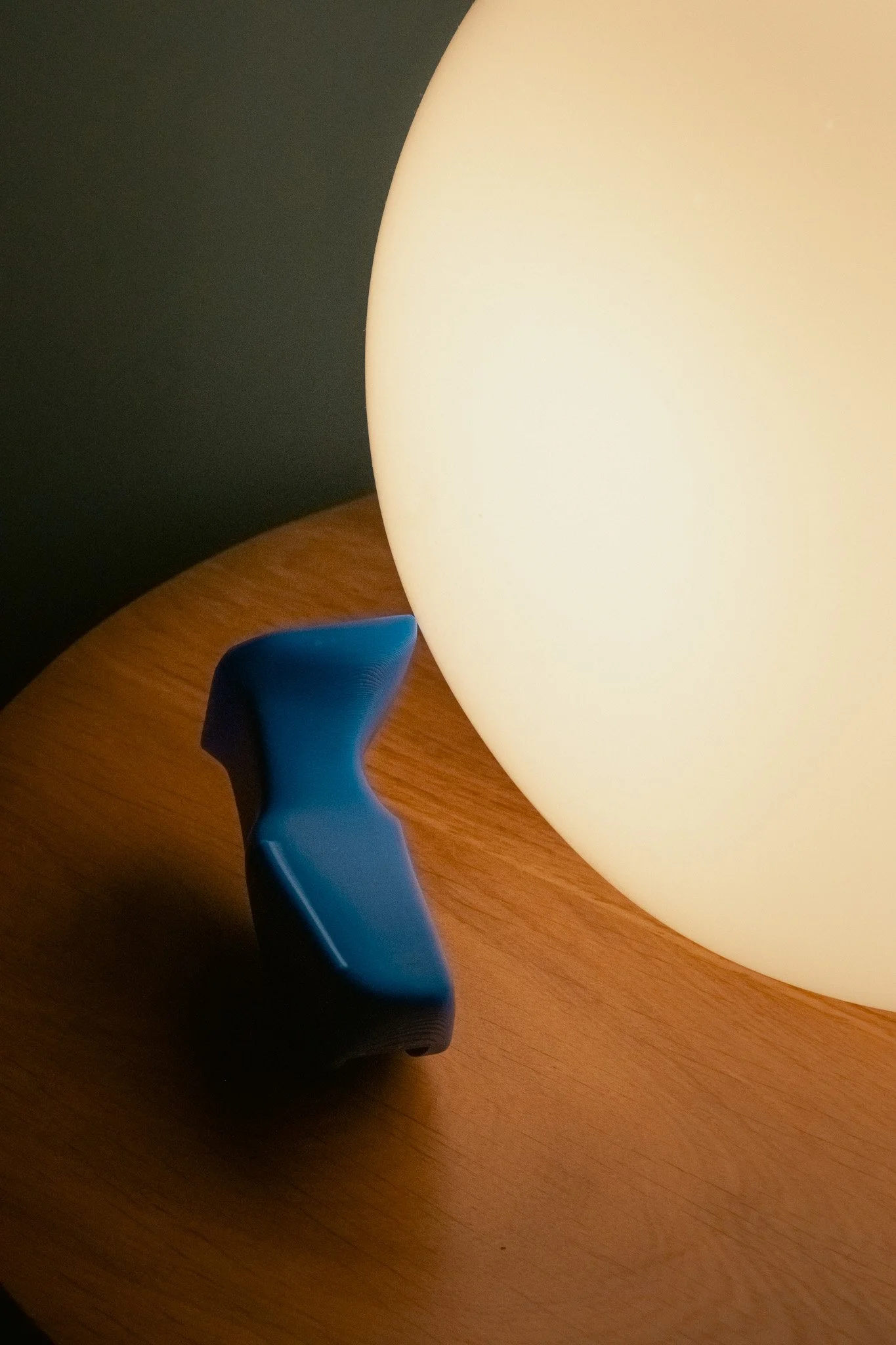
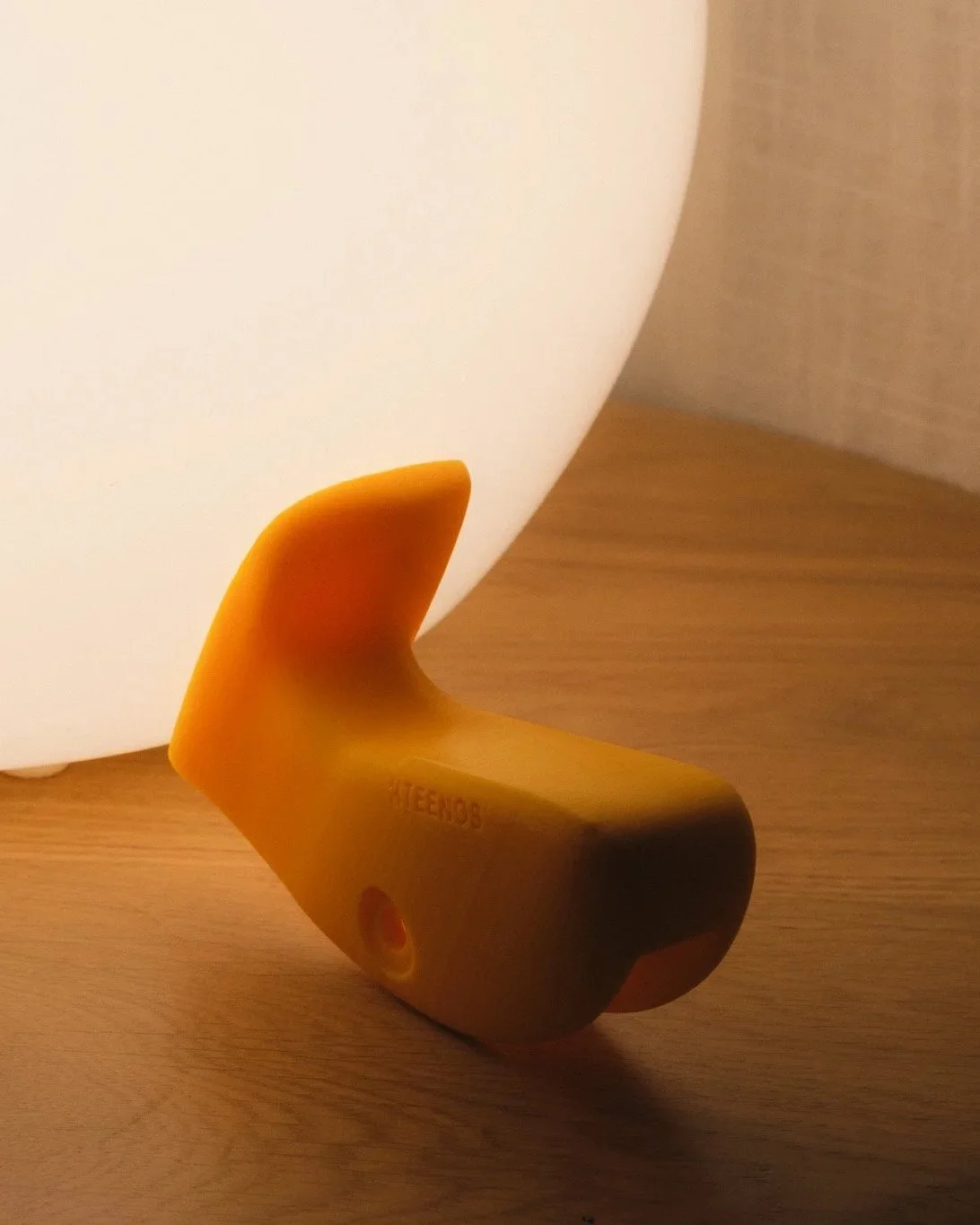
This is another KSL style grip, with the core feature being the extra thumb filling that is on the thumb side, which naturally encourages the 45° knuckle tilt.
The lifeline area has a defined edge, runs straight down. Just like the Master, the lifeline ridge is also available as an option, making it easier to locate the lifeline for hand placement.
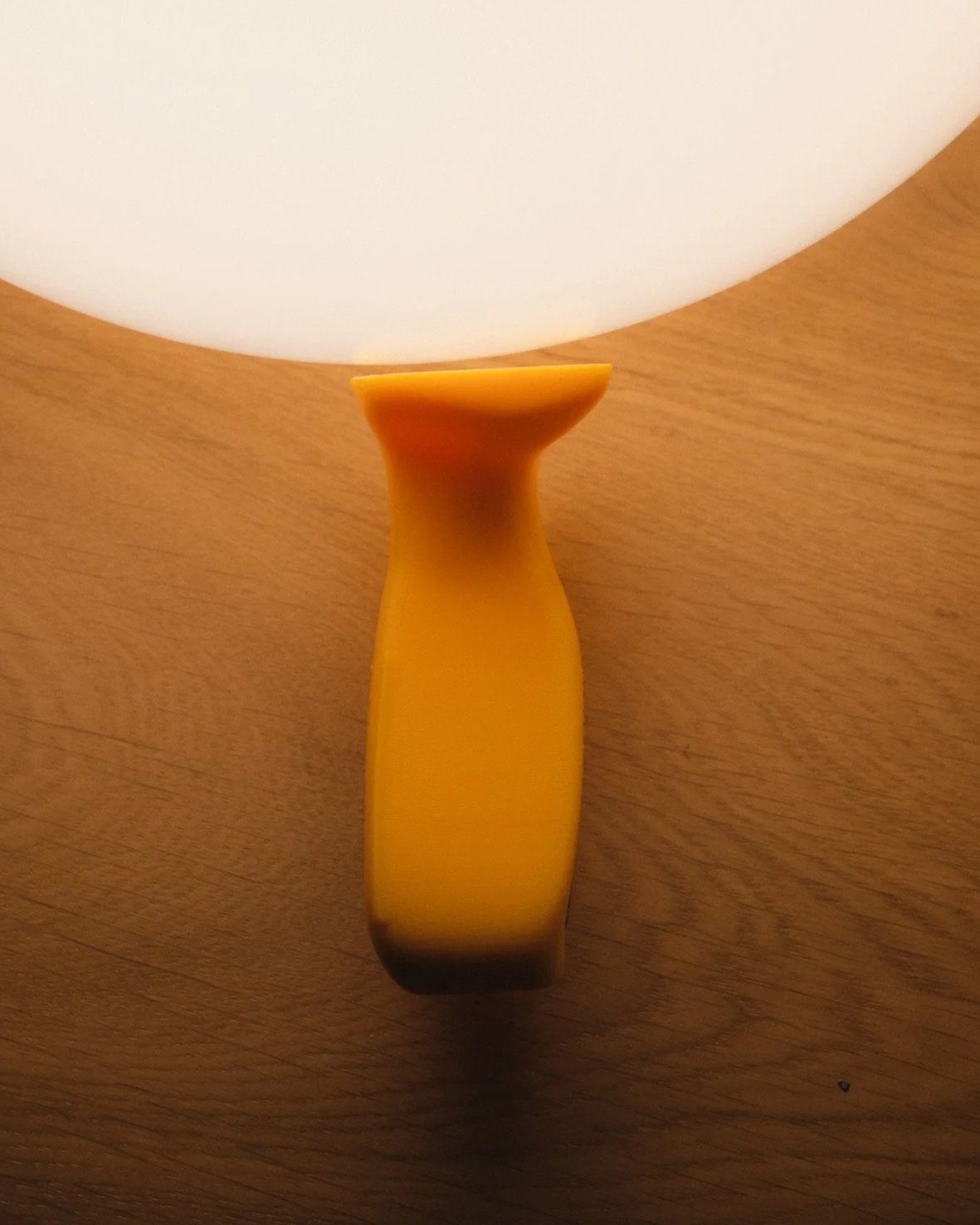
The width of the grip is quite standard, and should be comfortable and fit most hands. It has a flat pushing surface, but rounded and tapers down on the thumb side.
Given the thumb filling and positioner, it feels like a solid platform to push from, as there is pretty much no room for the hand to slide.
Best for:
Archers who want strong thumb engagement and maximum push stability.
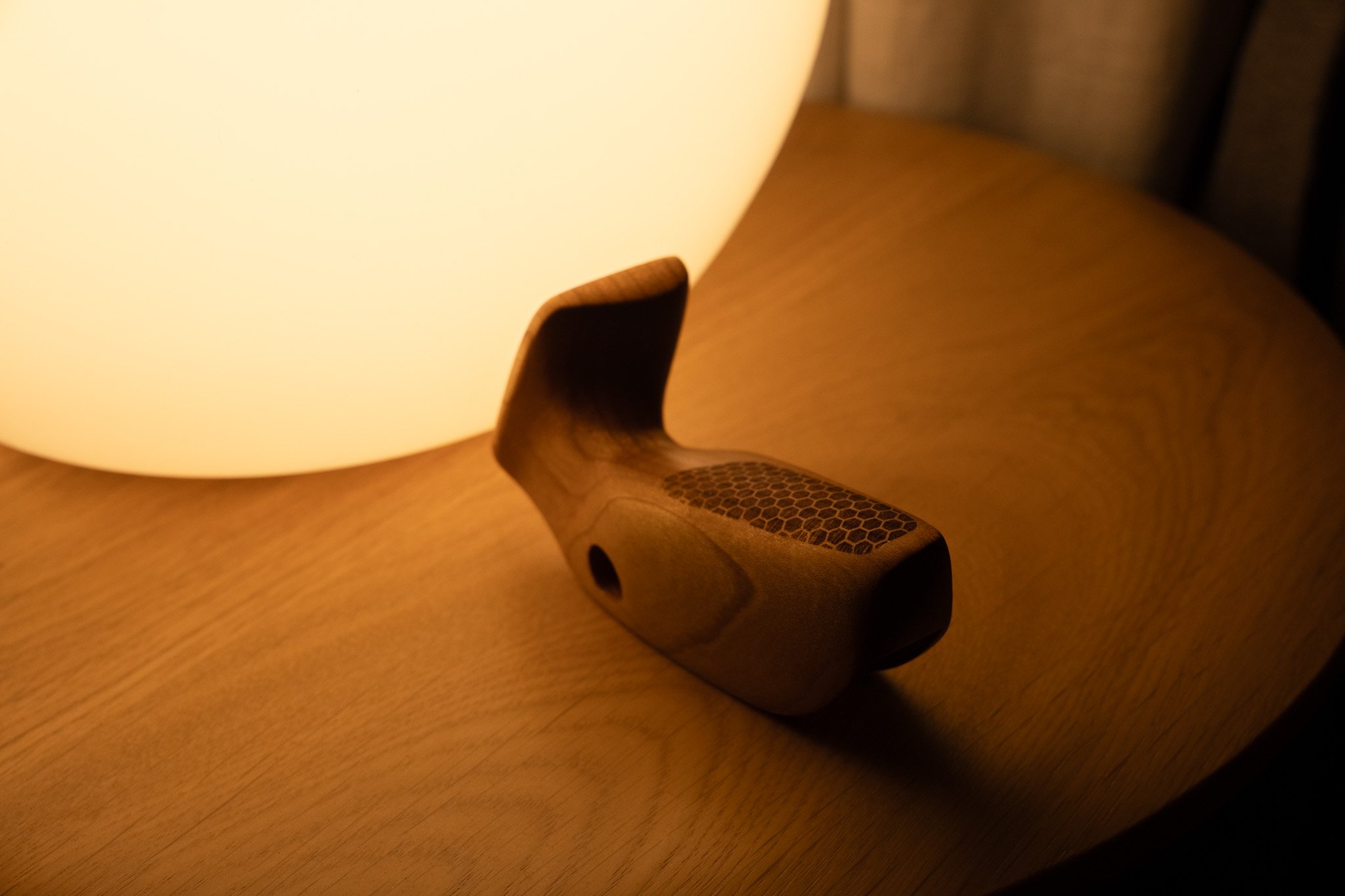
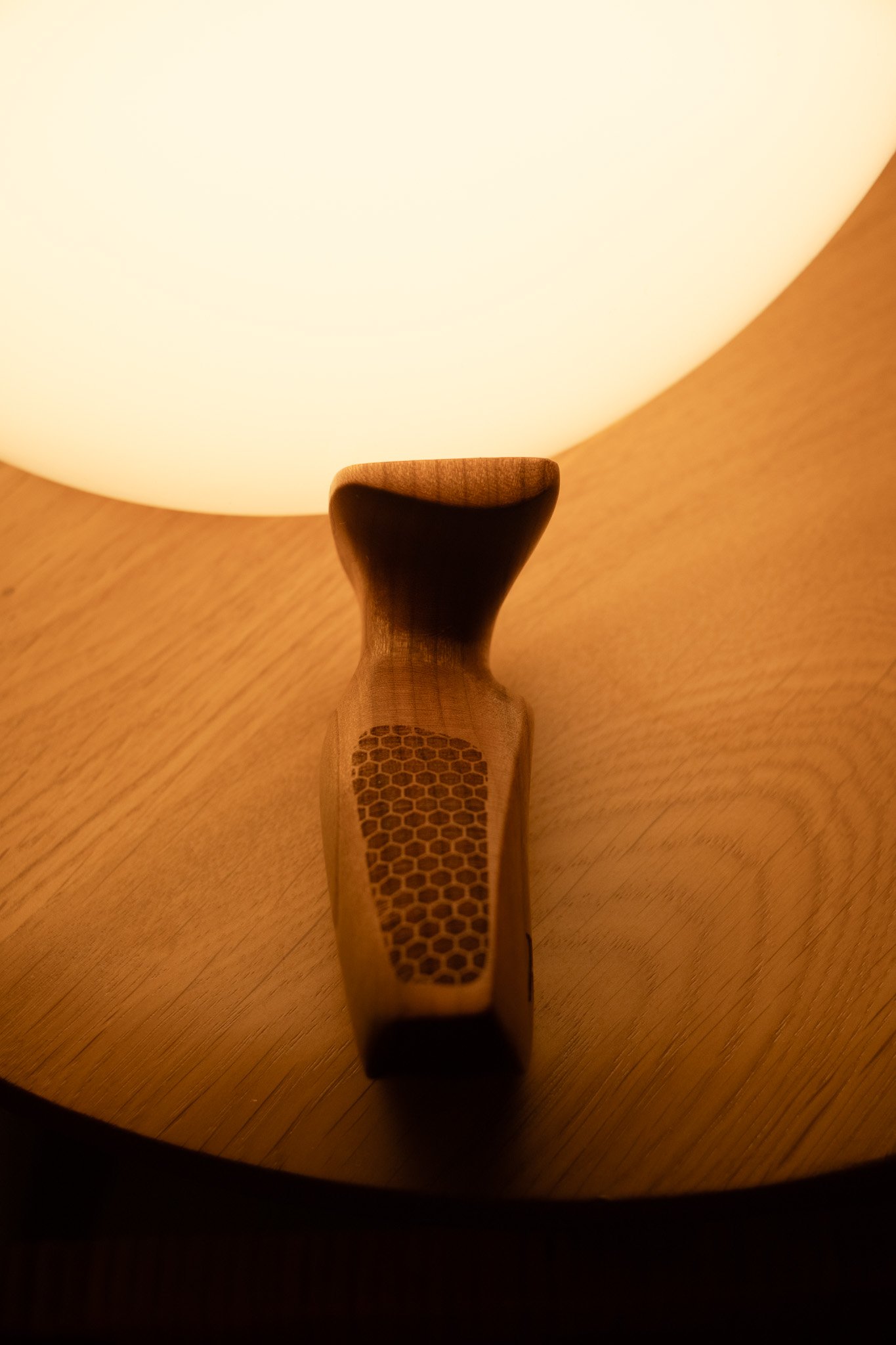
8. Ye0
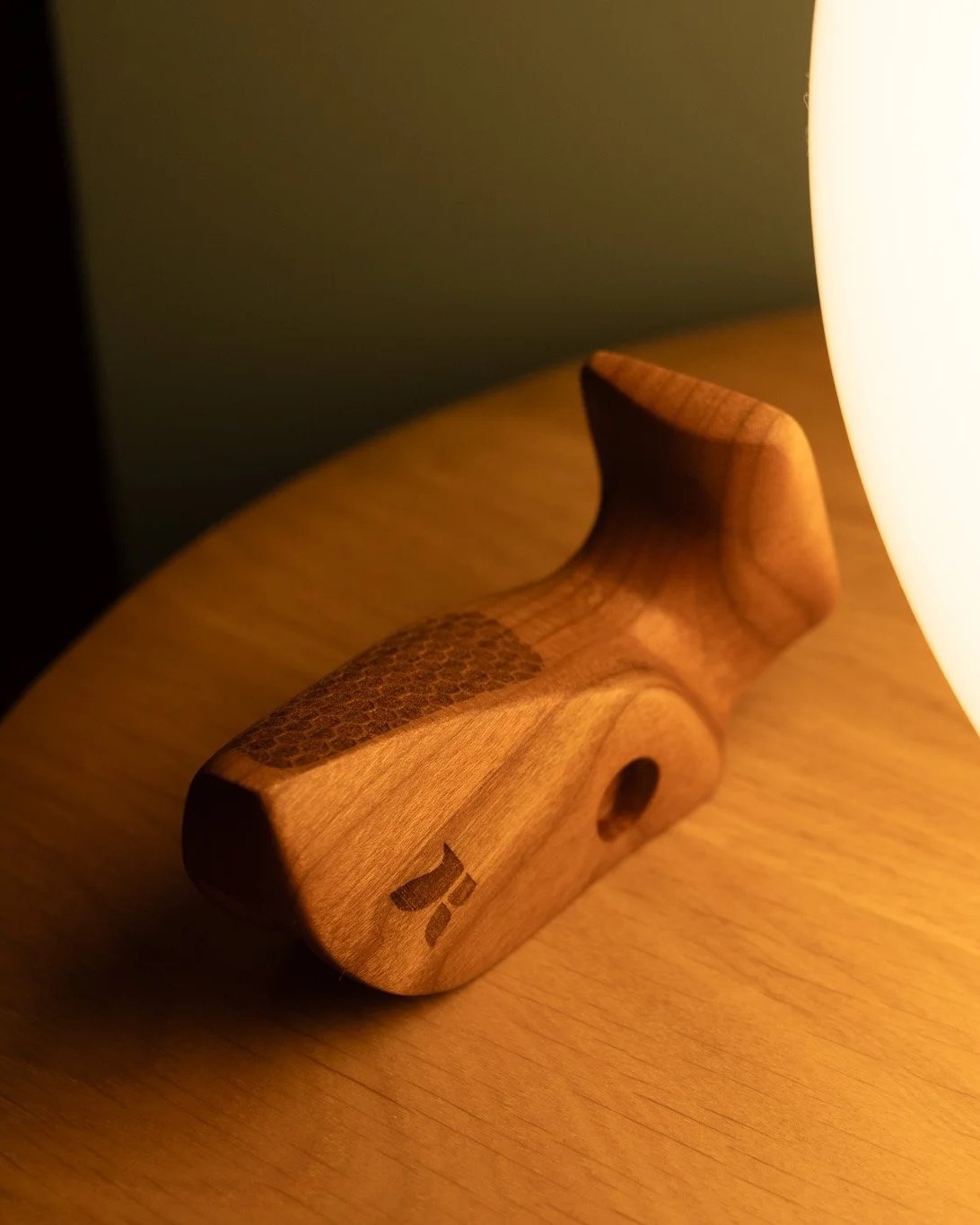
On a first glance, the Ye0 looks quite similar to the Bumblebee. Upon a closer look, there are several features that makes it stand out more than the Bumblebee.
Starting with the pushing surface, this has a slightly rounded surface, in line with other grips from Patrick Huston. The width of the grip is standard but closer to slim, which enables more clear feedback when setting the hand position on the grip.
Furthermore, the pushing surface is also slightly slanted to the thumb side, but not as much compared to the Master.
It also features a thumb positioner, which helps the archer naturally point the thumb towards the target. This is slightly different of the style offered on Master and Kteenos, where the shape encourages the archer to twist the wrist to point the thumb towards the target.
On the lifeline area, it has a rounded edge and tapers downwards. There is also a considerable amount of thumb filing area.
The combination of the thumb filling, thumb positioner and rounded lifeline area, makes this grip feels very firm to push against and easy to “lock in” the correct position, even without the presence of sharp edges.
Final thing to note is that the pivot point is slightly lowered, but not nearly as much as Curve Eternal or I Am Barebow.
Best for:
Archers wanting a firm, secure push with a natural, relaxed hand feel
Final Recommendations:
If you are NOT SURE WHAT TO GET: Bumblebee, I AM Recurve and Ye0 are safe bets, all of them have quite standard features, allows for easy hand placement regardless of hand size and pushing technique, while Ye0 encourages a natural firm contact between the bow hand and grip.
For archers with SMALL HANDS: I AM Compact, Bumblebee and I AM Recurve will be most suitable. I AM Compact has the most design features specific to archers with small hands. Bumblebee and I AM Recurve features a thinner width compared to the other grips, naturally more “snug” fit for smaller hands.
For archers with BIG HANDS: Master and Kteenos would be particularly suitable. To get the most out of the features on these two grips, slightly bigger hands are required, otherwise there could be a risk of not being able to comfortably or naturally push straight
For KSL-STYLE ARCHERS: Master, Kteenos and I AM Recurve would aid in the “pushing with the thumb” technique on the bow hand, naturally nudges you to push in that way.
For BAREBOW ARCHERS: I AM Barebow, Master, as well as I AM Recurve are worth considering, particularly in lower angle configurations. The Kaminski grips features flat surfaces, so that the pressure remains similar throughout different crawls,
Special thanks to Lucas and Lee from Merlin Archery London, as well as Aris from RCore for the support on the writing of this blog.